"VERY SOON": Trump Threatens Strike on Iran's Fortified Pickaxe Mountain
Gallery
Videos
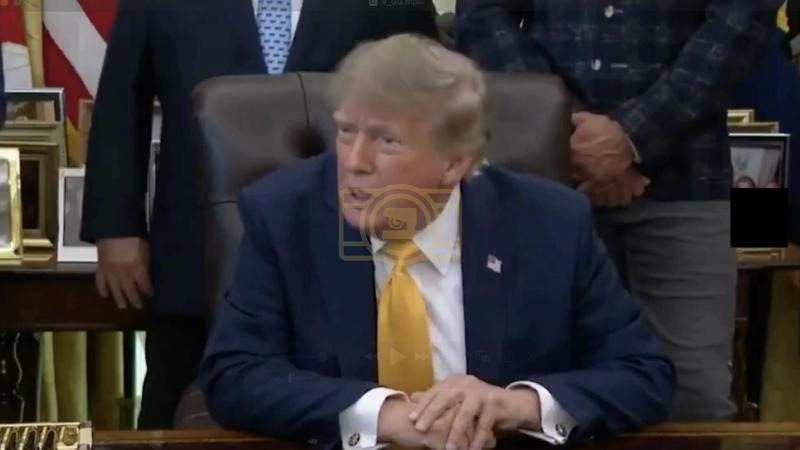
President Donald Trump escalated his rhetoric against Iran once again this week, declaring flatly that "Iran will not have a nuclear weapon" and warning that the United States may soon strike a facility known as Pickaxe Mountain. Speaking with reporters, Trump claimed the U.S. possesses detailed, real-time intelligence on activity at the site, saying, "We know everybody that's moving at Pickaxe. We know everybody that's moving everywhere, all over Iran." The comments arrive amid an already tense standoff between Washington and Tehran, with U.S. and Iranian forces having traded direct strikes in recent days near the Strait of Hormuz. Trump's warning marks the latest, and one of the most pointed, in a string of threats he has made against the site over the past several weeks.
Pickaxe Mountain, known in Iran as Kuh-e Kolang Gaz La, sits roughly 220 kilometers south of Tehran and just two kilometers from Iran's Natanz enrichment complex, one of the facilities the U.S. and Israel struck directly during the 12-day war in 2025. Construction at the site began in 2020, following a fire Iranian officials described as sabotage at Natanz's above-ground centrifuge assembly plant, and satellite imagery analyzed by groups like the Institute for Science and International Security shows the underground complex has continued expanding since. U.S. intelligence assessments indicate the facility's main chambers lie at least 100 meters beneath solid granite rock, a depth specifically designed to withstand the kind of bunker-busting munitions that damaged Natanz and other Iranian nuclear sites in past strikes. Despite the intensity of prior U.S. and Israeli military campaigns against Iran's nuclear program, Pickaxe Mountain has never been directly targeted, largely because intelligence had previously indicated the tunnel network was still under construction and not yet operational.
That calculus may now be shifting. Trump has acknowledged the possibility that Iran has moved sensitive equipment, including centrifuges, into the fortified tunnels to shield them from continued military pressure, though he has stopped short of confirming this with certainty, saying at one point that such a move "doesn't mean anything" unless paired with other evidence. Iran, for its part, maintains that no prohibited work is taking place at the site and insists its nuclear program remains peaceful, while its Khatam al-Anbiya military command has warned that any direct strike on Pickaxe Mountain would effectively renew full-scale war across the region. The International Atomic Energy Agency has never been granted access to inspect the facility, leaving outside analysts and even U.S. officials working largely from satellite imagery and intelligence estimates rather than direct verification of what the mountain actually contains.
Experts remain divided on both the strategic logic and the technical feasibility of an actual strike. Some analysts have noted that the U.S. and Israel notably avoided targeting Pickaxe Mountain even during last year's intense bombing campaign, suggesting that, at least until recently, it wasn't viewed as an imminent threat; others argue that even a direct hit might not fully destroy chambers buried so deep, and that strikes could instead focus on collapsing access tunnels, ventilation systems, or electrical infrastructure to disable the site without penetrating its core. With the diplomatic window for a negotiated deal having already expired in mid-August without resolution, and strikes between the two nations continuing on multiple fronts, Trump's latest warning suggests Pickaxe Mountain may be approaching the point where rhetoric turns into direct military action, a development that regional analysts warn could dramatically widen the current conflict.