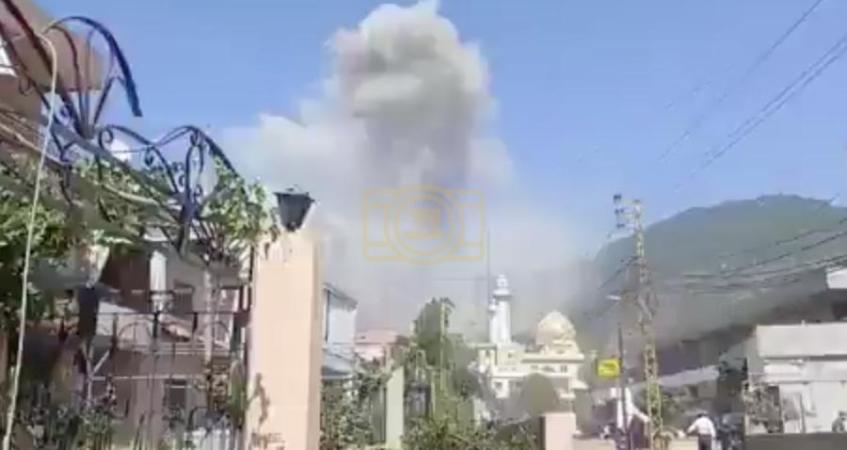
Second Israeli Strike Flattens Homes in Arabsalim as Smoke Chokes Southern Lebanon.
Gallery
Videos
Israeli warplanes carried out a second airstrike on the village of Arabsalim in southern Lebanon’s Nabatieh District on August 27, 2026, sending a massive gray smoke plume rising over residential buildings and a nearby mosque under clear skies. The attack targeted the village center and destroyed several homes, according to Lebanese media reports. Video footage lasting about ten seconds captured the thick column of smoke billowing upward immediately after the strike. Arabsalim sits roughly seven kilometers north of Ali al-Taher and lies outside the Israeli-occupied buffer zone. Residents described the sudden explosions that shook the area and left visible structural damage across multiple houses.
Lebanese sources confirmed that the strikes killed one woman who had recently married and moved to the village. A mother and her daughter were also injured in the same attack and required hospital treatment. The young woman’s death has drawn particular attention because of the short time since her wedding. Emergency teams worked through the rubble to recover the victims while neighbors gathered amid the dust and debris. The destruction of civilian homes in the heart of the village has heightened local fears of further escalation.
The incident forms part of persistent Israeli military operations across southern Lebanon that have continued despite a U.S.-mediated framework agreement reached in June 2026. That deal outlined a gradual Israeli withdrawal from occupied Lebanese territory in exchange for Lebanese army deployment and the disarmament of armed groups including Hezbollah. Negotiations on implementing the framework have taken place, yet airstrikes and other actions have not stopped. Israel has repeatedly cited ongoing security threats from the region, including the launch of booby-trapped or explosive-laden drones, as justification for its continued activity.
Local reports and video evidence show the scale of the impact on ordinary residential areas far from the immediate border zone. Thick smoke lingered over the village after the second strike, mixing with the clear afternoon sky and drawing attention from surrounding communities. The targeting of homes rather than clearly identified military sites has fueled criticism from Lebanese officials and residents who argue the operations endanger civilians. At the same time, Israeli statements continue to frame such strikes as necessary responses to specific threats originating from the area.
The human cost remains the most immediate consequence. A newly married woman lost her life, while a mother and daughter suffered injuries that forced them into emergency care. Families in Arabsalim and nearby towns face the constant uncertainty of whether the next strike will hit their streets. The combination of destroyed houses, visible smoke, and confirmed casualties has once again placed the fragile post-framework situation in southern Lebanon under intense scrutiny. As both sides trade accusations over responsibility for the violence, the people living in villages like Arabsalim continue to bear the direct results of each new attack.