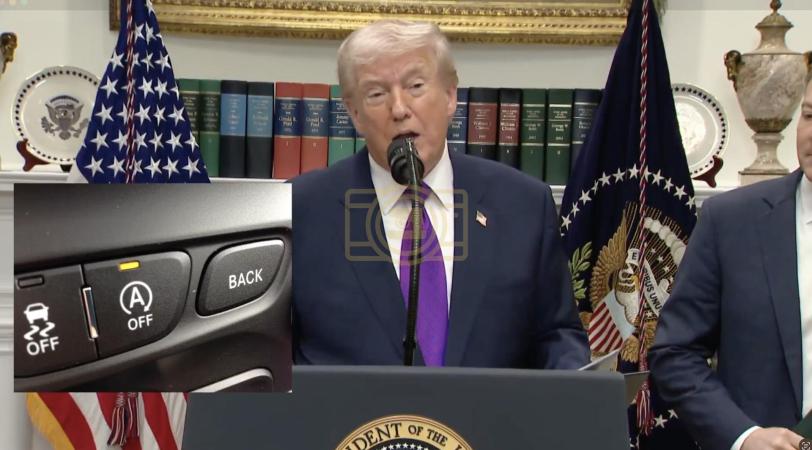
Trump Administration Moves to Phase Out Start-Stop Systems.

Gallery
Videos
The Trump administration has moved to eliminate a key regulatory incentive that drove widespread adoption of automatic start-stop technology in American vehicles, marking a significant shift in federal auto policy. On February 12, 2026, the Environmental Protection Agency, under Administrator Lee Zeldin, formally ended the off-cycle fuel economy credits that automakers received for installing start-stop systems—an Obama-era measure designed to reduce fuel consumption and emissions.
Start-stop technology automatically shuts off a vehicle’s engine when it comes to a complete stop, such as at traffic lights, and restarts it when the driver releases the brake. While the system was promoted as a fuel-saving innovation, it has long been a source of frustration for many drivers who object to the repeated engine cycling, cabin vibrations, and the need to manually disable the feature each time they start their vehicles. Because the system typically resets to “on” by default, drivers seeking to avoid it have had to repeat the process during every trip.
By removing the federal credit that made start-stop systems financially attractive to manufacturers, the EPA is eliminating a major economic driver behind their near-universal inclusion in modern vehicles. Automakers previously relied on these credits to help meet fleet-wide efficiency targets without making more costly mechanical changes. Without that regulatory incentive, industry analysts expect manufacturers to reassess whether the technology remains worth the added engineering complexity and customer dissatisfaction.
Supporters of the policy change argue that it restores consumer choice and aligns vehicle design more closely with driver preferences rather than regulatory formulas. They also contend that modern engines and transmissions have already achieved significant efficiency gains, reducing the relative benefit of start-stop systems compared to their perceived drawbacks in everyday driving conditions.
Critics, however, warn that removing the incentive could marginally increase fuel consumption and emissions across the fleet, particularly in urban stop-and-go traffic where start-stop provides its greatest theoretical benefit. The administration has signaled that broader efficiency goals will be pursued through alternative technological pathways rather than reliance on a single feature that many drivers actively disable.
The decision reflects a wider regulatory philosophy emphasizing cost reduction, simplification of compliance mechanisms, and responsiveness to consumer experience. For automakers, the change introduces new flexibility in vehicle design and feature packaging, potentially allowing future models to omit start-stop systems or make them optional rather than standard.
As the policy takes effect, the automotive market will determine how quickly the technology fades from new vehicle lineups. What is clear is that a feature once driven by regulatory incentives now faces an uncertain future, reshaping the balance between fuel economy strategies, engineering priorities, and driver satisfaction.