ADIR AWAKENS: Israel's F-35 Upgrade Rattles Tehran, Stuns Pentagon
Gallery
Videos
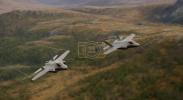
A wave of video compilations showing Israeli F-35I Adir jets in flight, in formation, and mid strike is drawing renewed attention to a quiet but significant transformation of Israel's stealth fighter fleet. The footage highlights modifications that give the Adir, Israel's customized version of the Lockheed Martin F-35, substantially greater range and heavier strike capacity than the aircraft's original design allowed. Israeli officials began confirming elements of the program earlier this year, describing it as a direct response to lessons learned during intense combat operations against Iran. What started as scattered reporting has since become one of the most closely watched fighter jet upgrade stories in the region.
At the center of the upgrade are new externally mounted fuel tanks, developed domestically by Elbit Systems' Cyclone division under a contract worth roughly 34 million dollars, adapted from a design originally built for Israel's F-16 fleet. The goal, according to Israel's Ministry of Defense, is to extend the Adir's operational range and cut its dependence on aerial refueling tankers, a logistical vulnerability that became especially apparent during long range missions deep into Iranian airspace. Alongside the fuel tanks, Israel worked with Lockheed Martin and the Pentagon's F-35 program office to develop a capability for carrying JDAM guided bombs externally on the wings, supplementing the weapons the jet normally carries hidden inside its fuselage. Together, the changes let a single Adir fly farther and strike with more munitions per sortie than before, at some cost to the aircraft's radar signature.
These are not theoretical improvements. Israeli officials say the modifications were already in informal use during 2025 and 2026 operations against Iranian targets, including strikes tied to the country's nuclear and military infrastructure, with reports describing some jets returning from missions with fuel reserves stretched to their limits before the new tanks were fielded. Photos released by the Israeli Air Force have shown an Adir configured in what officials call beast mode, carrying external JDAMs alongside air to air missiles, a loadout that trades some stealth for firepower and endurance when the mission calls for it. The willingness to accept that tradeoff signals how much Israel's understanding of the threat environment over Iran has shifted after repeated deep strike operations.
For Iran, the upgrade extends a problem it has already struggled to counter: an adversary capable of reaching distant targets with reduced logistical strain and without the same reliance on vulnerable tanker aircraft. For the Pentagon, Israel's rapid, homegrown fielding of range and payload enhancements has reportedly drawn interest as a possible template, with similar external tank concepts re-emerging as part of the United States' own F-35 modernization efforts. The upgrades reinforce Israel's broader push for uncontested air superiority at a moment when tensions with Iran remain far from resolved. As more footage of the modified Adir circulates, it is likely to keep fueling debate over how far a single fighter jet upgrade can shift the balance of deterrence across the region.