Australian Judge Rules: Anti-Zionism Is Not Antisemitism.

Gallery
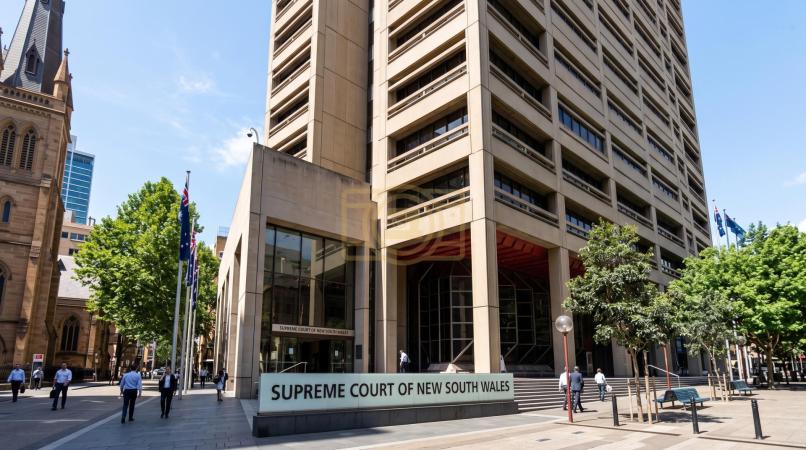
SYDNEY, AUSTRALIA — A highly significant ruling was handed down this week by the Supreme Court of New South Wales, with Justice Desmond Fagan stating unequivocally that anti-Zionism, or criticizing Zionism and the State of Israel, cannot inherently be classified as antisemitism.
The landmark decision was issued on Monday, August 17, 2026, in the case of State of New South Wales v Farhat. During the proceedings, the court addressed the question of whether anti-Israel rhetoric must automatically be deemed antisemitic.
In his ruling, Justice Fagan wrote that Zionism is an ideology of Jewish nationalism. As such, like any other political ideology, it remains open to debate and criticism. He directly addressed the argument that for many Jews in Australia, Zionism has become intertwined with their identity. However, the judge noted, this does not mean that an opponent of Zionism is an antisemite. A person can oppose Zionist ideology without harboring any hatred toward Jews for their Jewishness.
The judge pointedly asked how criticism of Zionism could be equated with hatred of Jews as a people, noting that even those who view Zionism as a core part of Jewish identity acknowledge that not all Jews are Zionists.
The ruling draws a clear line between Klal Yisroel and the State of Israel. Jews live across the globe, holding a wide variety of hashkafos and opinions. The State of Israel, conversely, is a geopolitical entity with its own government, policies, and decision-making processes. Therefore, Justice Fagan wrote, one cannot simply equate criticism—or even fierce opposition—to the State of Israel with hatred of Jews.
The judge also pointed out that there are Jews who are themselves staunch critics of the State of Israel. He questioned how criticizing Israel could automatically be labeled antisemitism when those very same views are held by Jews themselves. Even if a majority of Jews identify with Zionism, he explained, it does not mean anti-Zionists hate Jews; they may simply oppose the political ideology with which those Jews have aligned themselves.
This ruling comes at a crucial time in Australia, where a fierce public debate is currently raging over the legal and societal definition of antisemitism, and whether anti-Zionism should be included under that umbrella.
For heimishe Yidden, of course, this distinction is nothing new. For generations, Gedolei Yisroel and entire kehillos of ehrliche Yidden have vehemently opposed the Zionist shitah based on pure Torah hashkafa, which in no way contradicts their profound Ahavas Yisroel.
What makes this ruling noteworthy is that an Australian Supreme Court has now firmly established this fundamental distinction within the secular legal system: Anti-Zionism and antisemitism are not one and the same.
The full decision by Justice Desmond Fagan of the Supreme Court of New South Wales can be read here:
https://www.caselaw.nsw.gov.au/decision/1a00e6b4787e30be37fd7ccd