🚨 ISRAEL FINAL VOTE TALLY — Israel's Election Ends With No Bloc Reaching 61 Seats Needed to Form Government
Gallery
FINAL ISRAELI ELECTION RESULTS - ALL VOTES COUNTED
🔵 Right-wing bloc - 53:
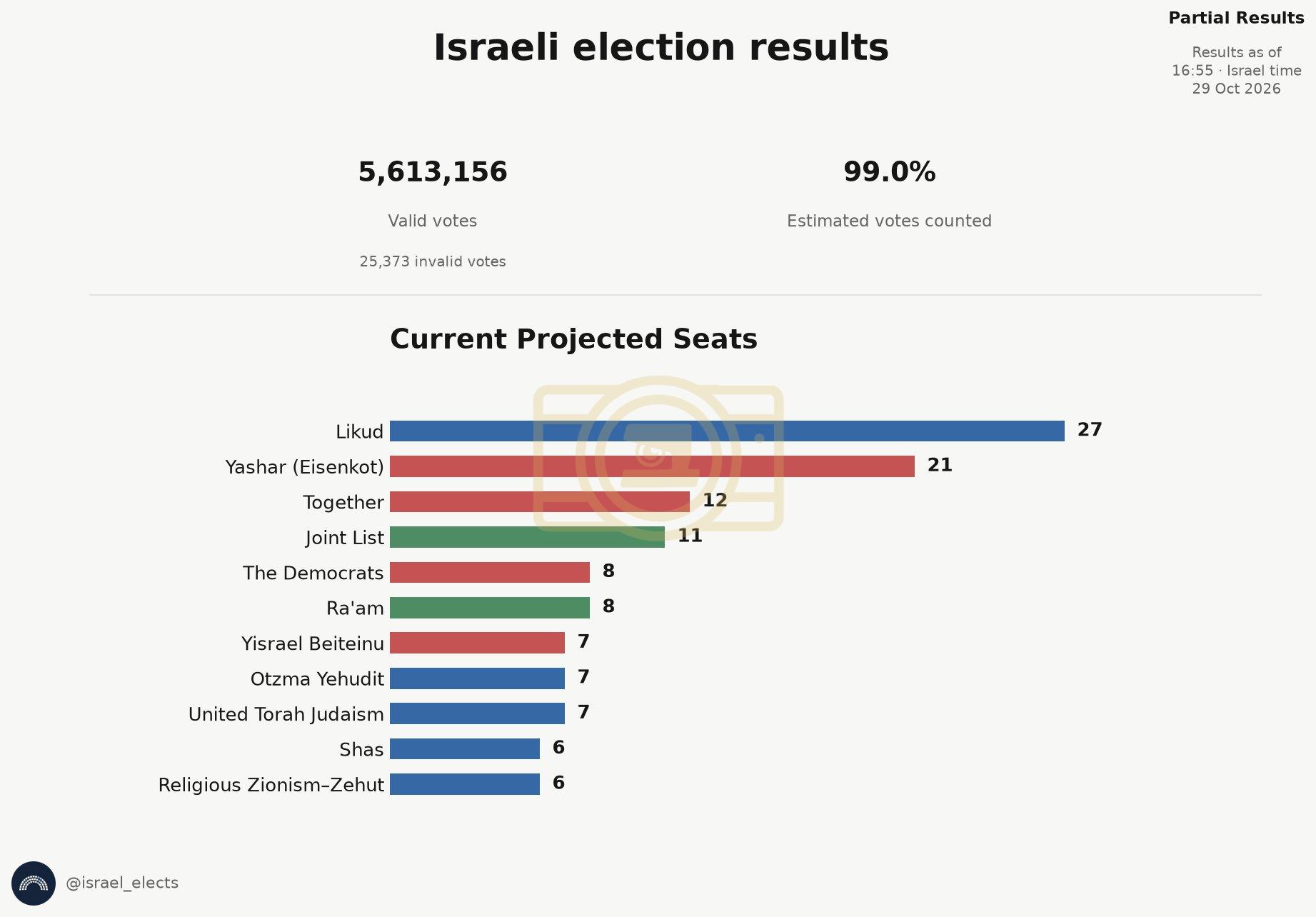
Likud – 27
Otzma Yehudit – 7
United Torah Judaism – 7
Shas – 6
Religious Zionism and Zehut – 6
🔴 Left-wing bloc - 48:
Yashar – 21
Bennett-Lapid – 12
The Democrats – 8
Yisrael Beiteinu – 7
🟢 Arab parties - 19:
Joint List – 11
Ra'am – 8
Israel’s final election results have left the country’s political future uncertain, with no major bloc securing the 61 seats required for a majority in the 120-member Knesset. The completed tally gives Prime Minister Benjamin Netanyahu’s right-wing bloc 53 seats, including 27 for Likud, seven each for Otzma Yehudit and United Torah Judaism, six for Shas, and six for the Religious Zionism and Zehut alliance. The opposing bloc, led by Yashar with 21 seats, secured a combined 48 seats alongside Bennett-Lapid with 12, The Democrats with eight, and Yisrael Beiteinu with seven. Arab parties captured 19 seats, divided between the Joint List with 11 and Ra’am with eight, making their parliamentary representation a significant factor in the post-election landscape. The results confirm that neither of the two main political camps can independently command a Knesset majority based on the reported bloc totals.
The seat distribution sets the stage for difficult negotiations as party leaders explore possible coalition arrangements, unity-government proposals, or other combinations capable of securing sufficient parliamentary support. Netanyahu’s Likud remains the largest individual party in the reported results, but the right-wing bloc’s 53 seats leave it eight short of a majority. Meanwhile, the opposition bloc’s 48 seats mean that it would also need additional support to form a government, with the Arab parties’ combined 19 seats potentially influencing negotiations depending on the willingness of other parties to cooperate with them. The final outcome will depend on political agreements, competing policy demands, and whether party leaders can bridge their differences to assemble a governing majority. Until a new government is formed, Israel faces a period of political uncertainty in which coalition negotiations will determine who can command the confidence of the Knesset.