NO NEED FOR NUKES: Trump Says Iran Too Weak to Warrant Escalation
Gallery
Videos
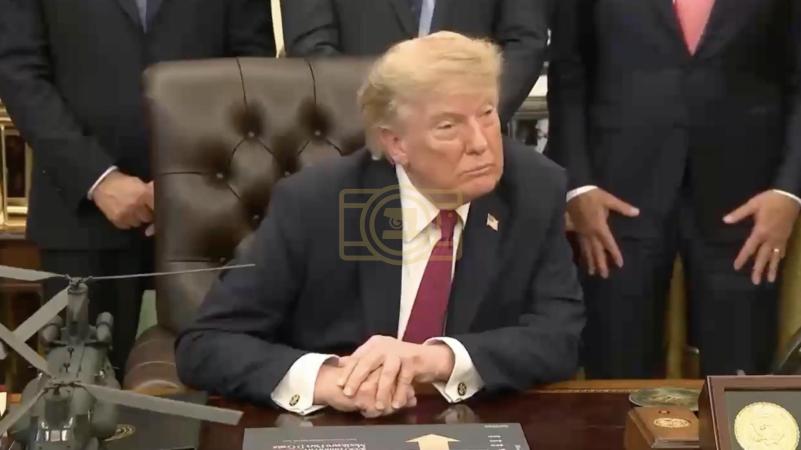
Asked point-blank in the Oval Office whether he had ruled out using a nuclear weapon against Iran, President Trump didn't hold back his irritation. "They're totally defeated militarily," he said, before turning the question back on the reporter with visible frustration: "So I defeat them and now I should use a nuclear weapon on top of them? What a stupid question." The exchange captured a president eager to project total conventional dominance over Iran, framing any further escalation to nuclear weapons as not just unnecessary but almost absurd given what he described as Iran's collapsed military state.
The remarks came amid an ongoing conflict between the US, Israel, and Iran that began in late February 2026, now stretching past six months and involving repeated American strikes on Iranian infrastructure and missile sites aimed at dismantling Tehran's nuclear ambitions. Trump has been consistent on one point throughout the war, repeatedly insisting that Iran "cannot have a nuclear weapon," framing it as a red line that goes beyond any single battle or skirmish. In the same breath as his nuclear-weapon dismissal, Trump reinforced his broader narrative of Iranian collapse, describing its leadership as scattered and largely gone, its navy and air force destroyed, and its surveillance capabilities all but eliminated after months of sustained military pressure.
What makes the exchange notable isn't just the rejection of nuclear escalation, but the reasoning behind it. By tying his answer directly to claims of Iran's total military defeat, Trump effectively argued that nuclear weapons would be overkill against an adversary he portrayed as already crushed by conventional means. That framing serves a dual purpose: it lets him publicly rule out the most extreme military option while simultaneously reinforcing the idea that the war has already achieved decisive success without needing to go there. At the same time, Trump has left the door open to continued conventional strikes, warning that the US could still "smack" Iran again depending on how Tehran responds to ongoing pressure, particularly around the Strait of Hormuz.
The Oval Office moment reflects a broader pattern in how Trump has managed messaging around the war, mixing blunt claims of victory with warnings that further action remains on the table if provoked. For a conflict now well into its second half-year, the question of nuclear weapons has lingered in the background of nearly every major statement Trump has made about Iran, whether reassuring allies that Tehran will never be allowed to build one or, in this case, dismissing the idea that the US would need to use one of its own. Whether his characterization of Iran's total defeat holds up as the war continues remains to be seen, but for now, Trump's answer left little ambiguity about where he currently stands on the nuclear question, even if the tone in which he delivered it raised as many eyebrows as the substance of the answer itself.