NO MORE SLOGANS: Bangladesh Army Tank Explosion Sparks Accountability Push
Gallery
Videos
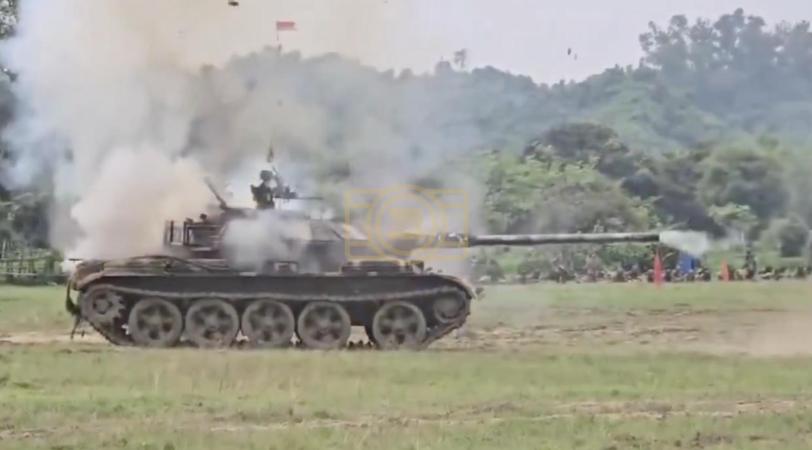
A routine live-fire exercise turned deadly on Wednesday at the Hathazari Field Firing Range in Chattogram, Bangladesh, when a tank suddenly exploded mid-drill, killing two soldiers and seriously injuring a commissioned officer. Bangladesh's Inter-Services Public Relations Directorate confirmed the incident in an official statement, saying the accident occurred while the crew was actively firing from the vehicle. While the ISPR has not officially named the specific tank model involved, multiple media outlets and video footage circulating online point to a Chinese-origin Type 59 main battle tank, a design Bangladesh operates in an upgraded local variant known as the Type 59G Durjoy. The injured officer was airlifted to the Combined Military Hospital in Dhaka for advanced treatment, while funeral arrangements for the two soldiers killed had not yet been announced at the time of the initial report.
Footage of the incident shows the tank maneuvering and firing normally in the moments before a sudden, violent blast erupts, sending heavy smoke and debris into the air and appearing to eject a crew member from the vehicle. The visual severity of the explosion has fueled rapid speculation online about the cause, with commentary already circulating about the reliability of ageing Chinese-origin armor still in active service across multiple militaries. The Type 59 itself traces its design back to a 1950s-era Soviet T-54 platform that China adapted and mass-produced for decades, and versions of it remain in use by several nations despite its age. Bangladesh's ISPR has stated only that an inquiry has been initiated, with no technical findings, range-safety conclusions, or comment from Chinese manufacturers made public so far.
This incident has understandably reignited a broader conversation about accountability when it comes to military hardware, particularly equipment that has aged well beyond its original design life. The core demand emerging from this tragedy isn't rhetorical outrage but a specific call for transparency: a full, independent investigation into what caused the explosion, rather than a quiet internal review followed by silence. Soldiers carrying out routine training exercises should be able to trust that the equipment they're using has been properly maintained and is fit for continued service, regardless of where it was originally manufactured or how long ago it entered the fleet. Investigators will need to carefully separate several possible contributing factors, including the tank's age, its maintenance history, the condition of the ammunition being fired, and whether proper procedures were followed during the drill, before any real conclusions can be drawn.
For now, many of the specifics remain unresolved, and the Bangladesh Army has not indicated whether firing exercises at Hathazari have been suspended following the explosion. What is clear is that two families have lost loved ones and an officer is recovering from serious injuries, consequences that go well beyond questions of geopolitics or defense contracts. As the investigation moves forward, the pressure will be on Bangladesh's military leadership to deliver real answers rather than a bureaucratic footnote, and on any foreign supplier involved to address legitimate concerns about the safety of hardware that soldiers are still relying on today. Until those answers arrive, the explosion at Hathazari stands as a stark reminder that decades-old military equipment carries real risks for the people trained to operate it.