"NO SHORTAGE OF TALENT": Pakistan's DIY Driverless Car Hits Police Van
Gallery
Videos
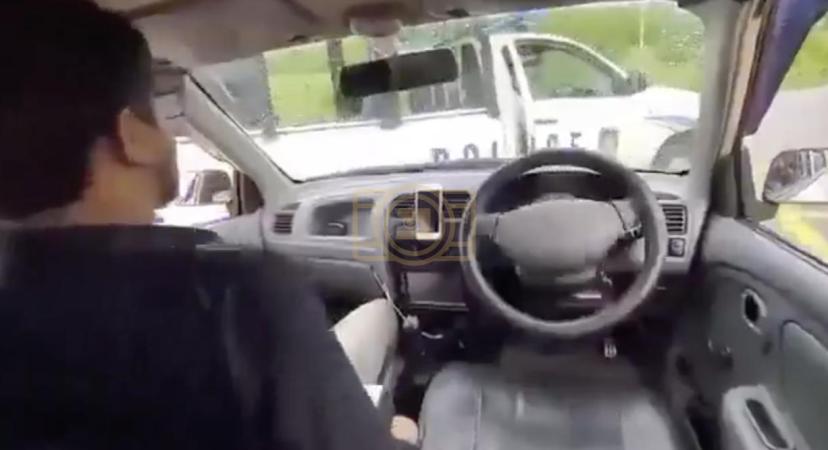
A tech demonstration in the heart of Islamabad took an unexpected turn on Sunday when a remotely controlled car, built by a young engineering student, veered off course and slammed into a parked police van. The vehicle, a Suzuki Alto rigged with internet-based remote controls, was being showcased at D-Chowk by Ehsan Zafar Abbasi, a third-semester computer engineering student from Abbottabad who has been experimenting with homemade automation projects since 2018. Journalist Muhammad Aalijah sat in the front passenger seat, narrating the demonstration for his followers, while Zafar operated the vehicle remotely through a mobile app from nearby. Just moments after Aalijah remarked that "Pakistan has no shortage of talent," the steering suddenly veered off course and sent the car crashing directly into the police vehicle.
The footage, which quickly went viral across social media, shows Aalijah frantically pulling the handbrake in a last-ditch effort to stop the collision, though his attempt came too late. According to Zafar's own account, the crash wasn't caused by a lost connection at all, but by a simple input mistake. While turning his phone to show the camera crew the car's remote controls, he accidentally pressed the button meant to steer left instead of right, sending the car directly into the parked van instead of away from it. It was, by his own description, a small human error during what was otherwise a functioning demonstration of his internet-controlled driving system.
Rather than treating the incident as a legal matter, Islamabad Police handled the aftermath with notable good humor. SP City Zone Dr. Ayaz Hussain personally reviewed the technology, examining both the software and hardware behind Zafar's invention before publicly clearing him of any wrongdoing. In a video statement, Hussain described the crash as a "genuine mistake" made during legitimate testing of an invention, finding no evidence of negligence or intent to cause harm. Rather than issuing a citation, police instead praised Zafar as an example of Pakistan's young technical talent, with Hussain calling him part of "the future of Pakistan."
For Zafar, the incident turned into an unlikely spotlight rather than a setback. He explained that he lacks a proper lab and typically builds and tests his inventions with limited resources at home, making the Islamabad demonstration a rare opportunity to show off years of self-directed work in remote vehicle control. He said police cooperated with him both immediately after the crash and again once the video spread online, taking the time to understand how his system actually worked before drawing any conclusions. What began as a viral moment of comic mishap ultimately became a story about grassroots innovation, with a police department choosing encouragement over punishment for a student experimenting well outside a formal lab setting.