RUNWAY OVERRUN: NTSB Details Path of Deadly Miami Cargo Jet Crash
Gallery
Videos
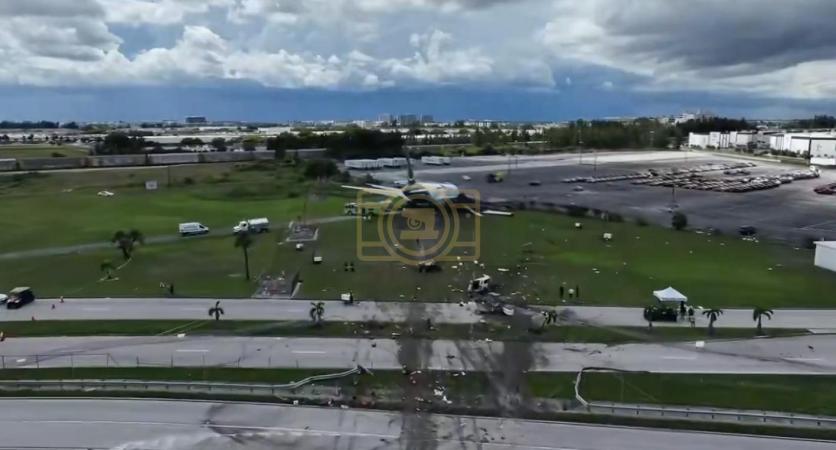
A Boeing 767-300 cargo plane operated by 21 Air for Amazon Prime Air overran runway 30 at Miami International Airport on September 6, 2026, after landing from San Juan, Puerto Rico. The aircraft exited the end of the runway, struck a van and a car, and came to rest after leaving the airport grounds. Five people in the vehicles were killed. Five others on the ground and the two pilots were injured.
The National Transportation Safety Board has released flight data and an animation depicting the aircraft’s path. Investigators reported that the plane touched down at a relatively high speed. About 15 seconds after touchdown, while traveling at approximately 120 knots, the brakes were released and the throttles were advanced to settings consistent with go-around thrust. Moments later the thrust was reduced to idle and the brakes were reapplied.
NTSB data indicates that neither the speed brakes nor the thrust reversers were deployed during the landing rollout. The absence of these standard deceleration devices, combined with the brief application of go-around power, left the heavy freighter with limited ability to stop within the remaining runway distance. The aircraft continued off the paved surface, crossed perimeter areas and struck the vehicles before stopping and catching fire.
Emergency responders arrived to find the aircraft on fire and people trapped in the impacted vehicles. More than 60 fire and rescue units responded. Airport operations were halted with a ground stop while crews worked the scene. Both pilots survived and have been interviewed by investigators as part of the ongoing inquiry.
The NTSB continues to examine cockpit voice recordings, pilot experience, aircraft systems and any possible contribution from cargo loading or other factors. Preliminary findings already highlight an unusual sequence of control inputs in the final seconds after touchdown. Aviation safety experts note that a delayed or incomplete decision to go around can consume critical runway length on a high-speed landing.
The accident has drawn attention to cargo operations at major airports and the risks when an aircraft leaves the runway environment. Families of the victims, the injured and the aviation community are awaiting further NTSB updates. The animation of the flight path and the detailed flight-data timeline provide the clearest public picture so far of how the Boeing 767 came to overrun the runway and strike vehicles beyond its end.