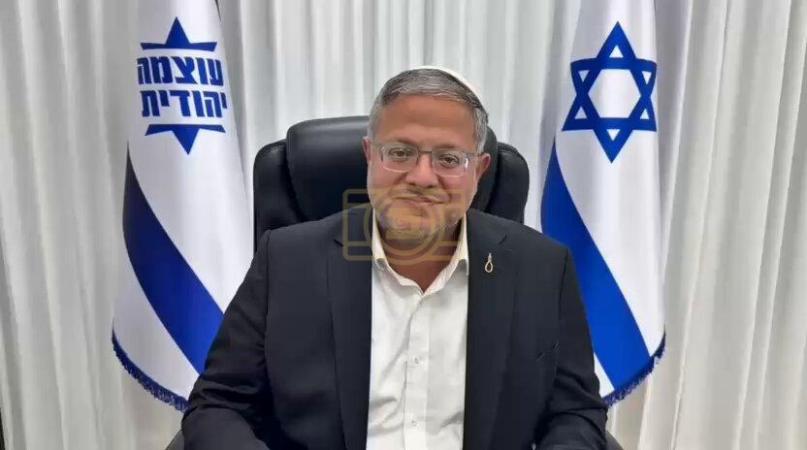
Ben Gvir Rejects Netanyahu's Call for Unity With Smotrich, Warns of Government With Eisenkot

Gallery
Videos
A new public dispute erupted on Israel's political right Thursday after Prime Minister Benjamin Netanyahu called on Otzma Yehudit chairman Itamar Ben Gvir and Religious Zionism chairman Bezalel Smotrich to unite ahead of the upcoming election, warning that running separately could endanger the right-wing bloc.
Netanyahu released a video arguing that divisions among parties on the right could result in votes being lost if smaller lists fail to cross the electoral threshold.
He invoked the 1992 election, saying that although the right received more votes than the left, several right-wing parties failed to enter the Knesset, contributing to the bloc's defeat.
“Ben Gvir and Smotrich must unite,” Netanyahu said, adding that he intends to invite the two party leaders for discussions in the coming days.
Ben Gvir rejected the proposal almost immediately.
In a video response, the Otzma Yehudit chairman accused Netanyahu of seeking a smaller Otzma Yehudit rather than genuine unity on the right, arguing that such an outcome would leave Netanyahu greater freedom to establish a broad government with former IDF chief of staff Gadi Eisenkot following the election.
“Both of us know the truth,” Ben Gvir said, addressing Netanyahu. “You want a small Otzma Yehudit so that you can go with Eisenkot and form a ‘broad national government.’”
Ben Gvir argued instead that Otzma Yehudit should run independently, while Smotrich and former IDF general Ofer Winter should join forces on another list.
“Only a large Otzma Yehudit, and Smotrich and Winter running together — only this way can a right-wing government be formed,” he said.
The confrontation comes amid an ongoing struggle over the configuration of parties to Netanyahu's right ahead of the election.
Ben Gvir has repeatedly rejected calls to run on a joint slate with Smotrich, arguing that the two parties appeal to different constituencies and that separate lists could ultimately bring more voters into the right-wing bloc.
The dispute has also become intertwined with Netanyahu's campaign promise to establish what he has called a “broad national government.”
Ben Gvir has publicly expressed suspicion that the phrase signals Netanyahu's willingness to form a government with Eisenkot after the election. Netanyahu, meanwhile, has been focused on preventing right-wing votes from being lost through parties failing to cross the electoral threshold.
The latest exchange leaves the question of an electoral alliance unresolved as Netanyahu prepares to summon Ben Gvir and Smotrich for talks.
Editorial Disclaimer: Reporting on Israeli political proceedings, elections, or legislative affairs is provided solely for journalistic and informational purposes. This coverage does not reflect recognition of the secular authority or its governing bodies. In accordance with the traditional hashkafah of leading Torah authorities, participation in the Israeli Knesset, government coalitions, or state governance is strictly prohibited. We maintain absolute loyalty to authentic Torah guidance, separate from secular political structures.