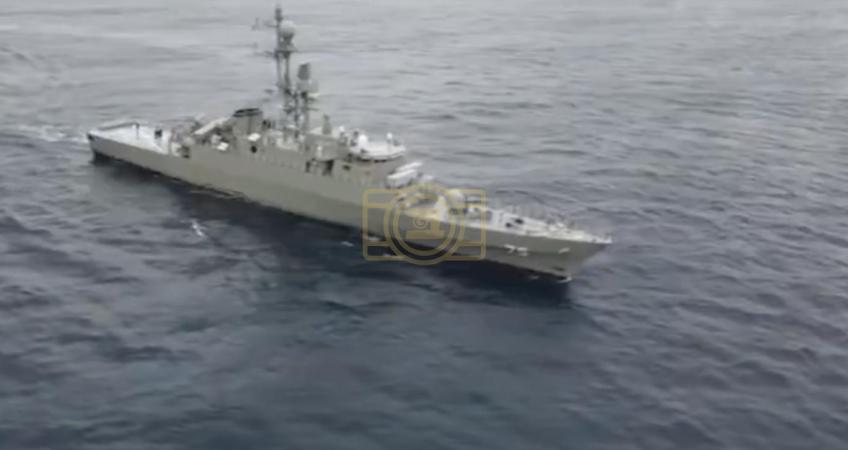
Iranian Warship Joins India Naval Drill.
Gallery
Videos
Iran’s navy has deployed the domestically built Dena destroyer to the Indian port city of Visakhapatnam to participate in the MILAN 2026 multinational naval exercise, a move that highlights Tehran’s efforts to project maritime presence beyond its immediate region. The exercise, hosted by India and involving more than 70 nations, focuses on interoperability, maritime security, and coordinated responses to shared threats across the Indo-Pacific and adjoining waters.
The Dena, a Mowj-class vessel commissioned in 2018, represents one of Iran’s most advanced surface combatants currently in service. Equipped with indigenous radar systems, surface-to-surface missiles, anti-ship capabilities, and anti-submarine warfare tools, the platform is frequently cited by Iranian officials as evidence of the country’s growing domestic defense industry. Its deployment to a high-profile multinational exercise serves both operational and symbolic purposes, signaling Tehran’s intent to be recognized as a regional naval actor capable of sustained blue-water operations.
India’s decision to host the Iranian vessel alongside ships from a wide range of countries reflects New Delhi’s longstanding strategy of maintaining diplomatic and defense engagement across competing blocs. By inviting Iran while simultaneously deepening partnerships with Western and Indo-Pacific allies, India continues to position itself as a balancing power seeking strategic autonomy rather than alignment with any single security framework. This approach allows India to preserve energy ties with Tehran, maintain access to regional trade corridors, and reinforce its role as a convening power in maritime security dialogues.
The timing of the deployment is notable given ongoing instability in key shipping lanes, including heightened tensions affecting Red Sea transit routes and broader concerns over freedom of navigation. Multinational exercises such as MILAN are designed to improve coordination on issues ranging from piracy and trafficking to humanitarian assistance and disaster response. Iran’s participation, however, introduces a geopolitical dimension, as its naval forces are often associated with asymmetric maritime tactics and regional power projection.
The absence of U.S. naval participation in this year’s exercise has drawn attention from security observers who view the development as indicative of shifting diplomatic dynamics in the region. While the United States continues to operate extensively in the Indo-Pacific through other frameworks and bilateral engagements, its non-participation in this particular exercise underscores the complex and evolving nature of maritime coalitions.
From a strategic standpoint, the Dena’s presence in Visakhapatnam demonstrates Iran’s desire to normalize its naval diplomacy and expand operational familiarity with multinational environments. For India, hosting a diverse array of participants reinforces its image as a central maritime stakeholder capable of engaging both Western partners and states that remain outside traditional alliance structures.
As MILAN 2026 unfolds, the convergence of competing naval doctrines within a single exercise illustrates the increasingly multipolar character of global maritime security. The participation of vessels from dozens of countries—each with distinct strategic priorities—highlights both the opportunities for cooperation and the underlying geopolitical tensions shaping today’s naval landscape.