Mysterious Radio Station Sends Coded Messages to Iran.

Gallery
Videos
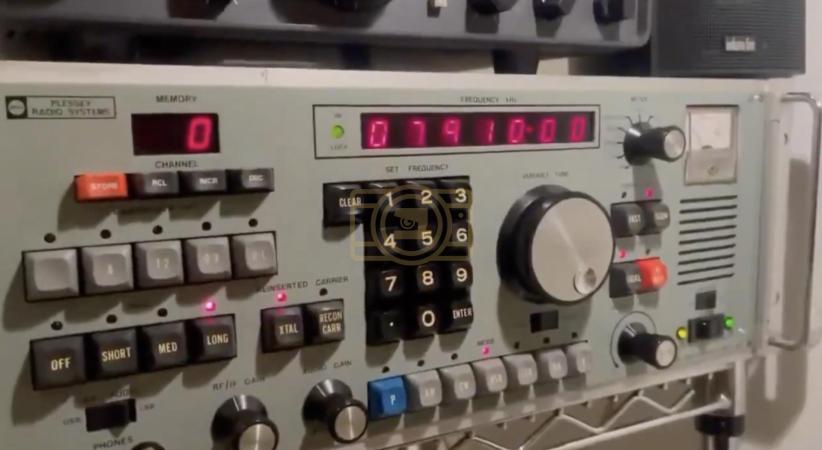
A mysterious shortwave radio station has been transmitting encrypted messages in Persian, reportedly from Western Europe, following the start of U.S.-Israel military strikes against Iran on February 28, 2026. According to reports from Manoto TV, the broadcasts feature a Persian-speaking voice saying “Attention, attention,” followed by sequences of numbers. Intelligence experts suggest these transmissions may serve as covert instructions to sources inside Iran, potentially designating meeting points or issuing operational guidance to field agents. Video footage capturing reception on 7910 kHz shows the traditional numbers station format, a technique dating back to Cold War espionage, valued for secure, one-way communication resistant to interception.
The broadcasts began shortly after the escalation of airstrikes on Tehran’s nuclear and military sites, indicating a possible link to coordinating internal resistance networks or intelligence operations within Iran. Former U.S. intelligence officials note that stations like this are commonly used to maintain communication channels when other means are compromised or monitored. Reception reports indicate that radio enthusiasts and analysts have been able to track and decode portions of the transmission, providing insight into the station’s operational role.
Iranian authorities appear aware of the broadcasts, as subsequent transmissions were disrupted by electronic beeps and noise, likely reflecting jamming efforts to prevent communications with internal agents. Analysts suggest that these interruptions confirm the regime’s concern over the station’s effectiveness in conveying sensitive information. Despite these efforts, transmissions have resumed intermittently, highlighting the resilience and redundancy of covert communication networks.
Observers note that the use of shortwave encrypted broadcasts underscores the increasing reliance on traditional yet secure communication methods amid modern conflict. The station provides a low-tech, hard-to-trace mechanism to maintain contact with operatives inside Iran, even under heavy surveillance and electronic countermeasures. Intelligence experts emphasize that the persistence of these broadcasts reflects both the importance of internal networks during the conflict and the challenges Iran faces in controlling information flow within its borders.