CIVILIZATION'S SHADOW CALLS: Secretary Rubio Claims Unbreakable Link to Athens and Rome
Gallery
Videos
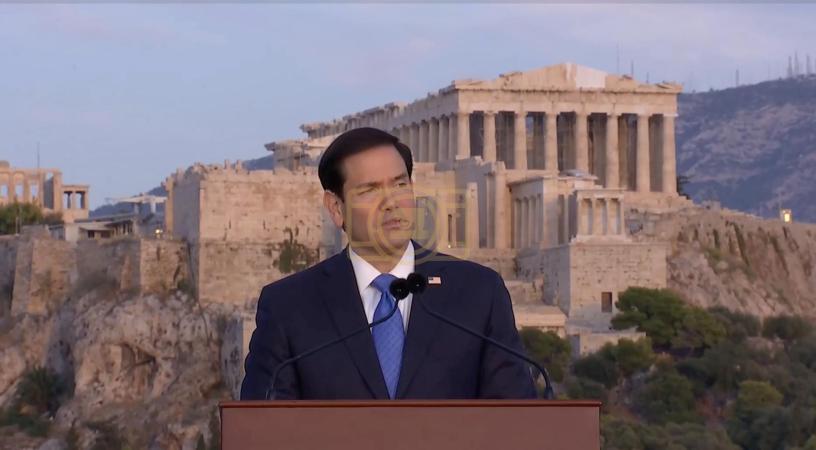
Standing in the shadow of the Acropolis in Athens, Secretary of State Marco Rubio delivered a powerful reflection on the enduring legacy of the Parthenon and the civilization that created it. He noted that for twenty-five centuries the ancient temple has stood firm while empires rose and fell beneath its gaze. Rubio emphasized that the descendants of those who built it—the sons of Athens and Rome—carried their culture and values to every corner of the world. Two and a half centuries after the founding of the American republic, far from the hills of Greece, he stood as the top diplomat of that nation to acknowledge a profound connection. As the great-grandson of settlers who came from Spain to the New World, Rubio framed his presence as living proof of that shared inheritance. He described the bond as a debt that neither the passage of time nor the vast distances of geography could ever erase. The remarks underscored how the spirit of classical antiquity continues to shape the identity and purpose of the United States.
Rubio’s words highlighted the unbroken line from the builders of the Parthenon to the founders and citizens of America today. He presented the speech as a personal and official testimony to the influence of Greek and Roman civilization on the American experiment. By linking his own family history of Spanish settlers to the broader story of Western expansion, he illustrated how that ancient heritage crossed oceans and generations. The secretary made clear that this debt remains active and living, not a distant historical footnote. His address invited listeners to recognize the deep roots that still nourish American institutions and ideals. In doing so, Rubio positioned the United States as a modern carrier of the same civilizational flame first lit in Athens. The moment captured both historical reverence and a call to remember the sources of Western strength.