WATCH: U.S. Navy Showcases Low-Cost Laser Defense Capability.

Gallery
Videos
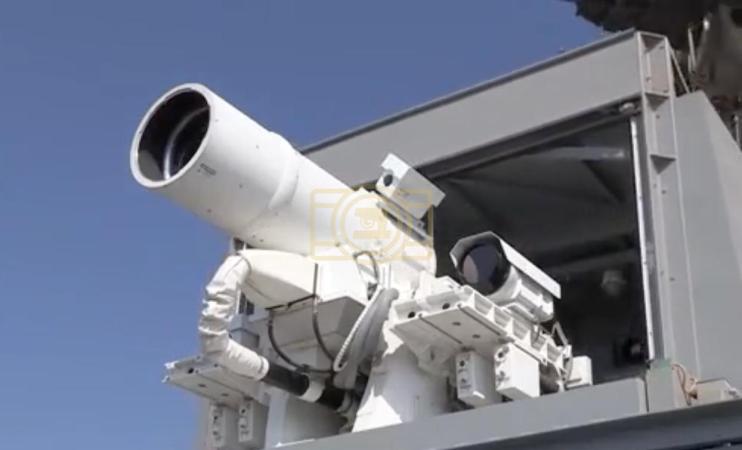
The United States Navy achieved a significant technological milestone with the successful demonstration of a shipborne Laser Weapon System aboard the USS Ponce, confirming that directed energy capabilities are no longer theoretical but operationally deployable. Conducted on an afloat forward staging base platform, the test validated the system’s ability to integrate with existing naval combat architecture while delivering precise, near-instantaneous engagements against designated targets.
During the demonstration, operators utilized a console comparable to conventional ship combat systems, underscoring the weapon’s compatibility with established command-and-control workflows. Sensor feeds and electro-optical cameras were fused into a unified targeting interface, enabling crews to detect, track, and positively identify threats before initiating a focused energy discharge. This level of integration reduces training barriers and allows the laser to function as an organic component of layered ship defense rather than a standalone experimental asset.
One of the most notable performance characteristics was engagement speed. Unlike kinetic interceptors that require launch sequences, flight time, and midcourse guidance, the laser delivered energy on target almost immediately once a firing solution was achieved. This compresses the defensive timeline against fast-moving threats such as unmanned aerial systems and small surface craft, where seconds can determine the difference between interception and impact. The precision of the beam also minimizes collateral effects, concentrating energy on critical components to disable or destroy targets without explosive ordnance.
Equally significant is the cost-per-shot advantage. Traditional missile interceptors can cost hundreds of thousands to millions of dollars per engagement, imposing sustainability challenges during high-volume attack scenarios. In contrast, laser firings rely primarily on electrical power generated by the host platform, reducing marginal costs to a fraction of kinetic alternatives. This economic efficiency enhances endurance in contested environments, allowing ships to counter swarming threats without rapidly depleting finite missile inventories.
From a strategic perspective, the successful deployment aboard USS Ponce demonstrates the feasibility of directed energy as part of a layered defensive doctrine. Lasers can complement existing missile and gun systems by providing a scalable response option across a spectrum of threats, from reconnaissance drones to lightly armored vessels. Their deep magazine potential—limited mainly by power generation and thermal management—offers a sustained defensive capability particularly relevant in regions where adversaries employ asymmetric tactics and massed low-cost platforms.
The test also highlighted the maturation of beam control, targeting stability, and environmental compensation technologies that historically constrained naval laser development. Achieving reliable tracking and engagement in a maritime setting requires overcoming platform motion, atmospheric distortion, and power distribution challenges. The system’s performance indicates meaningful progress in these areas, bringing directed energy closer to routine fleet integration.
As naval forces confront increasingly complex threat environments, the operational validation of a shipboard laser represents a transformative step in defensive warfare. By combining speed-of-light engagement, precision targeting, and dramatically lower operating costs, directed energy weapons offer a compelling enhancement to maritime security and a forward-looking solution for countering emerging aerial and surface threats.