NIGHT OF FIRE: IRGC Claims Strikes on US Ships, Eight Tankers in Gulf
Gallery
Videos
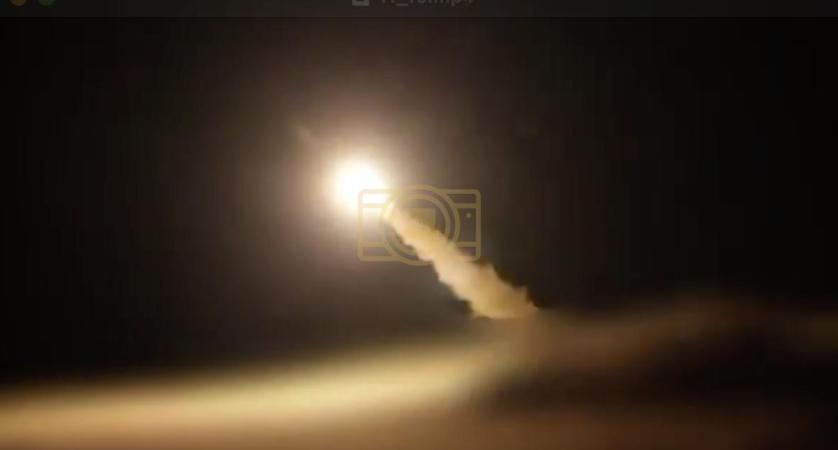
Iran's Revolutionary Guard Corps has released dramatic nighttime footage it says shows its navy striking two US vessels and eight oil tankers in the Persian Gulf, part of what Tehran describes as retaliation for recent American attacks on Iranian-linked shipping. The video shows a series of missile and drone launches lighting up the night sky, followed by bright explosions and fires breaking out at sea. According to a statement carried by Iranian state media, the IRGC Navy also targeted ten additional vessels attempting to pass through what it called the "restricted and unsafe zone" of the Strait of Hormuz. The IRGC Navy further warned all ships operating near the strait not to be deceived by the US military and to avoid any suspicious movement toward unauthorized waterways, cautioning that they too could be targeted.
Iran's claims come directly on the heels of a real and confirmed American strike days earlier. US Central Command confirmed it had destroyed five oil tankers tied to the IRGC, hitting the M/T Downy and M/T Stark 1 near Kharg Island and Jask, and completely destroying an unladen tanker called the M/T Kylo in the Gulf of Oman. CENTCOM said those strikes came in response to Iran's Revolutionary Guard Corps launching ballistic missiles at a US aircraft carrier and a guided-missile destroyer, both of which reportedly evaded the attack without damage or casualties. Admiral Brad Cooper, the CENTCOM commander, delivered a blunt warning afterward, stating that any Iranian strike on American ships would be met with an even higher cost imposed on Iranian assets. The IRGC's Aerospace Force, meanwhile, insisted its missiles had actually damaged both American warships, forcing them to retreat from the area, a claim that stands in direct contradiction to the US account and has not been independently verified.
This latest round of claims and counterclaims fits into a broader, increasingly dangerous pattern that has defined the Strait of Hormuz for months. The Iranian tankers hit by the US were described by CENTCOM as part of a multibillion-dollar shadow fleet funding the IRGC and its regional proxies, a claim consistent with earlier rounds of American strikes on similar vessels throughout the year. As both sides continue trading blows, independent confirmation of actual damage on either side remains extremely limited, with most claims coming solely from state media and military statements rather than verified footage or third-party assessments. The economic ripple effects, however, are much harder to dispute; oil prices have climbed above the closely watched $100-a-barrel mark, and Iranian officials have acknowledged the country has only about two months of gasoline supply left as the ongoing blockade and sanctions squeeze its economy.
The stakes surrounding this exchange go well beyond a single night's headlines. This marks the first direct exchange of strikes between the two sides in more than a month, reviving fears of a renewed and more intense retaliatory cycle after a relatively quieter stretch. Regional actors are taking notice as well; Qatar's foreign ministry has publicly urged Gulf states to build greater self-reliance in security rather than depending solely on American protection, a sentiment shaped by the fact that Qatar itself was repeatedly targeted during earlier phases of the conflict. With the US, UK, France, and Germany also pushing a new resolution at the IAEA aimed at referring Iran to the UN Security Council over nuclear compliance concerns, the maritime confrontation in the Gulf is unfolding alongside mounting diplomatic pressure, leaving little indication that either front is likely to cool down soon.