ALARMING: JPMorgan Forecasts 5% Global Food Inflation Surge by Early 2027.
Gallery
Videos
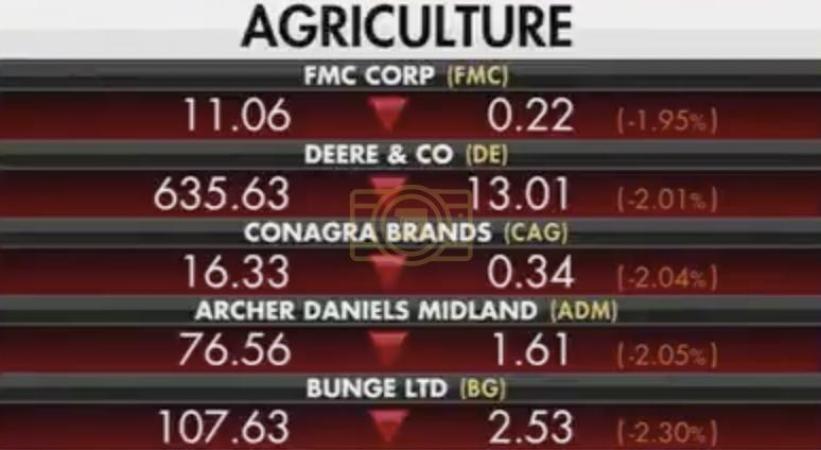
JPMorgan has issued a stark warning about a potential global food crisis emerging in 2027, projecting food inflation to climb to 5 percent in the early part of that year. The forecast marks a sharp rise from the 2.8 percent rate expected in 2026 and was highlighted during an August 25 market check on Fox Business. Analysts pointed to a combination of climate and geopolitical pressures that could disrupt supplies and push prices higher. The report, titled “Food Security is National Security: A Compounding Storm,” frames the issue as both an economic and strategic concern. U.S. food inflation currently hovers near 3 percent while agriculture stocks have shown weakness.
A key risk identified by the bank is the possibility of a super El Niño event capable of disrupting major crop-producing regions. Such weather patterns have historically reduced yields of critical staples and intensified price volatility across global markets. At the same time, energy pressures linked to the Iran conflict are seen as a threat to fertilizer supplies that must transit the Strait of Hormuz. Nitrogen fertilizer in particular faces no strategic reserve system comparable to the stockpiles maintained for oil. This absence leaves agricultural production more vulnerable to sudden supply interruptions.
The report emphasizes that food security is increasingly viewed as a matter of national security. Without reliable access to fertilizers and stable growing conditions, countries could face rising import costs and domestic price pressures. JPMorgan’s analysts noted that the current environment already shows signs of strain, with U.S. food inflation remaining elevated near the 3 percent mark. The projected jump to 5 percent global food inflation in early 2027 would represent a meaningful acceleration that could affect household budgets and broader economic stability. Markets have already reflected some of this caution through softer performance in agriculture-related stocks.
Fertilizer supply chains remain a central point of concern. Much of the world’s nitrogen fertilizer moves through maritime routes that include the Strait of Hormuz, a chokepoint now subject to heightened geopolitical tension. Any sustained disruption would raise input costs for farmers and potentially reduce planted acreage or yields in subsequent seasons. Unlike petroleum, for which many nations maintain emergency reserves, no equivalent buffer exists for nitrogen products. This structural gap amplifies the impact of even temporary interruptions in production or shipping.
The compounding nature of the risks—climate disruption from a possible super El Niño layered on top of energy and fertilizer constraints—forms the core of JPMorgan’s warning. The bank’s analysis suggests these factors could interact in ways that elevate food prices more sharply than either threat alone. Policymakers and market participants are being urged to recognize the strategic dimension of food systems at a time when inflation remains a sensitive issue for consumers. The projection of 5 percent global food inflation in early 2027 stands as a clear signal that current trends may not remain contained.
As the forecast circulates, attention is turning to whether governments and industry will take steps to strengthen supply resilience. The absence of nitrogen fertilizer reserves leaves a notable vulnerability in the global agricultural system. Combined with the potential for adverse weather and ongoing energy-market pressures, the conditions outlined by JPMorgan point to a period of heightened uncertainty for food prices. The report’s findings are likely to influence discussions among investors, farmers, and officials in the months ahead as they assess the path toward 2027.