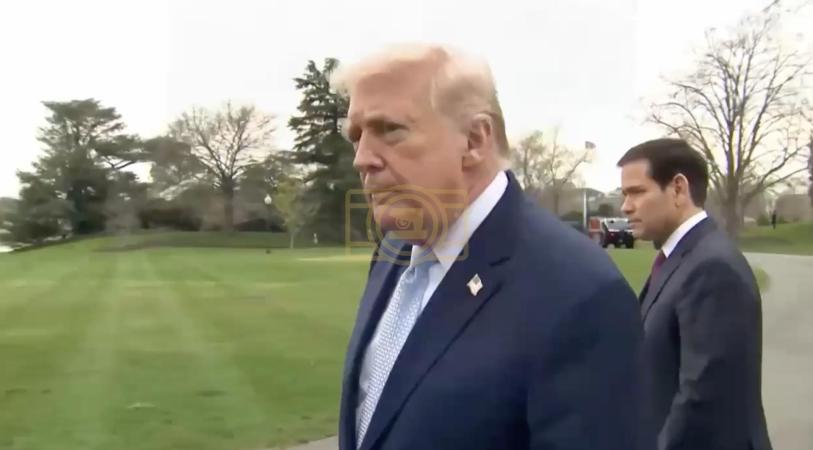
President Trump Says Reopening Hormuz Needs Allied Support.
Gallery
Videos
President Donald Trump said reopening the Strait of Hormuz is a manageable military task, but made clear that the United States should not be expected to shoulder the mission alone. Speaking about the crisis, Trump described the operation as a relatively simple and safe maneuver that would still require substantial ship volume and escort capacity. He argued that NATO should be helping and openly criticized the alliance for refusing to step forward, saying its members have not shown the courage needed to protect a waterway so vital to global energy markets.
Trump also widened the appeal beyond NATO, saying countries that heavily rely on the strait — including China — should be directly involved in securing it. That argument reflects his broader insistence that nations benefiting most from open trade routes should carry more of the burden when those routes come under threat. For the president and his supporters, the issue is not whether the United States can act, but whether other major consumers of Gulf energy will finally take responsibility for defending their own economic lifeline.
The Strait of Hormuz remains one of the world’s most critical chokepoints, handling roughly one-fifth of global oil flows and a major share of liquefied natural gas shipments. Disruptions there have already rattled markets and intensified fears of a wider energy shock, with oil prices jumping sharply as the conflict escalates. Trump’s remarks come as U.S. pressure on Iran increases and as Washington pushes allies and partner nations to contribute naval assets rather than relying once again on American force alone.
So far, however, many of America’s traditional partners have resisted direct military involvement. Reuters reported that Spain, Germany, and Italy were among the countries that said they had no immediate plans to send ships, while Spain later ruled out participating in military operations in the strait altogether. European officials have instead emphasized diplomacy and de-escalation, exposing a widening gap between Washington’s demand for action and allied reluctance to join a U.S.-led response.
Trump’s comments reinforce a message that has defined much of his foreign policy: strategic waterways that fuel the global economy cannot be defended indefinitely by America alone while others hesitate on the sidelines. By calling out NATO and even urging China to step in, he is turning the Hormuz standoff into a test of whether the world’s biggest beneficiaries of maritime stability are willing to help preserve it. The result is a sharp burden-sharing challenge at the center of an already dangerous confrontation with Iran.