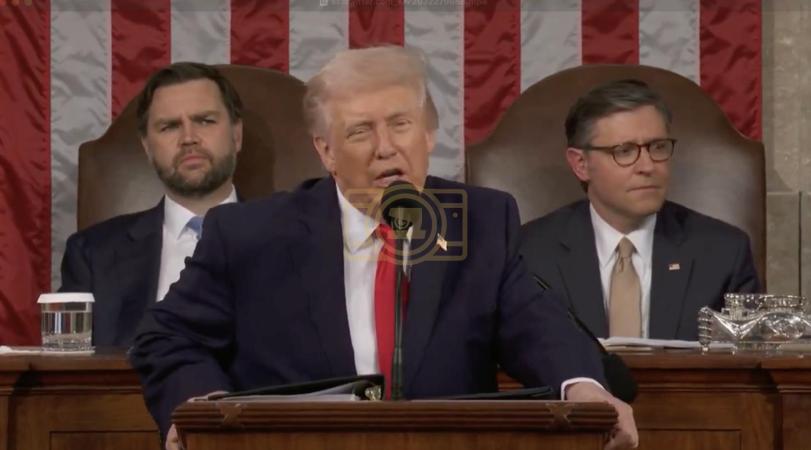
Trump Accuses Democrats of Defunding Homeland Security.
Gallery
Videos
President Donald Trump sharply criticized congressional Democrats during his February 25, 2026, State of the Union address, accusing them of cutting off funding for the Department of Homeland Security and triggering a partial shutdown that has now entered its twelfth day. The president argued that the funding lapse directly impacts the federal agency tasked with safeguarding the nation from terrorism, transnational crime, and border-related threats.
The Department of Homeland Security, which oversees agencies including Customs and Border Protection, Immigration and Customs Enforcement, the Transportation Security Administration, the Federal Emergency Management Agency, and the U.S. Coast Guard, has been operating under constrained conditions since mid-February. While essential personnel remain on duty, certain administrative functions and non-essential operations have been curtailed as lawmakers remain deadlocked over appropriations.
At the center of the dispute is immigration enforcement policy. Senate Democrats have rejected Republican-backed funding measures that do not include additional limitations on enforcement authority and related oversight provisions. The administration maintains that imposing such conditions would weaken operational control at the border and undermine national security priorities. The White House has framed the impasse as a broader ideological conflict over how aggressively to enforce immigration law and secure the southern border.
Trump’s remarks linked the funding standoff to what he described as significant progress in border enforcement and public safety metrics. He argued that maintaining full operational capacity at Homeland Security is essential to sustaining those gains and preventing a resurgence of unlawful crossings or criminal exploitation of border vulnerabilities. Administration officials have emphasized that any prolonged disruption could strain personnel, delay modernization efforts, and complicate interagency coordination.
Democratic leaders counter that oversight and statutory guardrails are necessary components of responsible funding legislation. They argue that appropriations should reflect policy priorities beyond enforcement alone, including humanitarian processing standards and accountability mechanisms. The result has been a legislative stalemate that underscores the deeply polarized environment surrounding immigration and homeland security policy.
Historically, shutdowns affecting national security agencies generate heightened political pressure due to their visible public impact. Airport security screening, disaster preparedness coordination, and maritime security operations continue but face resource constraints, placing additional burdens on federal employees and contractors. As negotiations proceed, lawmakers from both parties have expressed interest in avoiding extended disruption, though substantive differences remain unresolved.
The funding dispute highlights the broader strategic debate over border control, federal authority, and the allocation of security resources. With public attention intensified by the president’s address, the coming days will determine whether bipartisan compromise emerges or whether the shutdown persists amid continued partisan confrontation.
As Congress deliberates, the operational readiness of the Department of Homeland Security remains intertwined with political negotiations, reinforcing the high stakes of budgetary decisions in an era where immigration and national security dominate the policy landscape.