RUSSIA WAR: Ukraine's Drones Reach 1,400 Km To Reach and Strike Russia's Giant Oil Plant.
Gallery
Videos
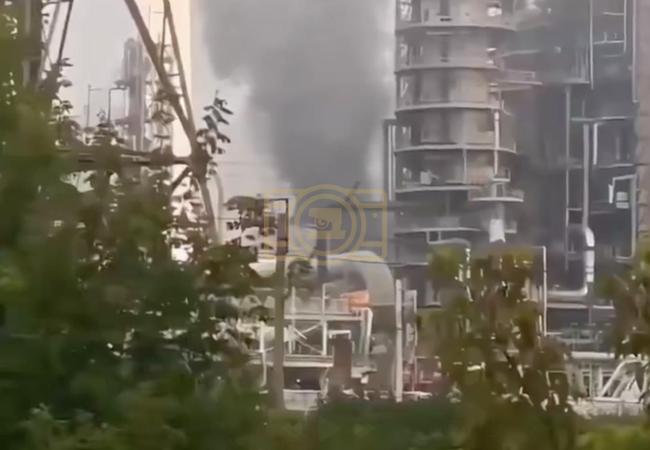
Ukrainian drones struck the Bashneft-UNPZ oil refinery in Ufa, Bashkortostan early Wednesday morning, igniting a fire that sent thick smoke pouring into the sky over the industrial complex. The attack damaged support equipment tied to the AVT-6 primary distillation unit, a critical piece of infrastructure that was already undergoing repairs from an earlier strike on the same facility earlier this month. Bashkortostan governor Radiy Khabirov confirmed the fire and said the damaged unit was under maintenance when it was hit, adding that falling debris also caused minor damage to nearby pipes. He said Russian air defenses intercepted four of six drones that targeted the region overnight, and that repairs to the affected equipment should be completed within a few days. A drone threat alert had been declared across Bashkortostan shortly after 4:30 a.m. local time and remained in effect for roughly three hours as explosions and air defense activity were reported by residents.
This is not an isolated incident. Ufa's refining cluster, made up of the Bashneft-UNPZ, Bashneft-Novoil, and Bashneft-Ufaneftekhim plants, has been targeted repeatedly by Ukrainian drones throughout the summer, with strikes recorded in early August, early July, and June as part of a sustained campaign. All three facilities belong to Rosneft and together process roughly 23.5 million tons of crude oil annually, making the complex one of Russia's largest and most strategically important fuel-production hubs. The AVT-6 unit specifically handles desalting and primary fractionation of crude oil, separating it into components like kerosene, gasoline, diesel, and fuel oil before those products move on to secondary processing. Because Ufa sits more than 1,400 kilometers from the front line, the repeated strikes highlight just how far Ukraine's long-range drone capabilities now reach into Russia's deep rear.
Beyond the refinery, a separate drone reportedly veered off course and struck a residential building in Ufa's Zaton neighborhood, shattering windows on upper floors and damaging parked cars below, with at least one person reported injured. Russian officials have consistently downplayed the scale of damage from these strikes, framing them as minor incidents involving equipment already scheduled for repair. Even so, the pattern of repeated hits on the same facilities suggests Ukraine is deliberately targeting refining capacity that Russia has struggled to fully restore between attacks. Analysts note that this kind of persistent, cumulative pressure on refining infrastructure can be more damaging over time than any single strike, since it prevents facilities from ever returning to full operational capacity.
The broader campaign against Russia's refineries has already contributed to fuel shortages in parts of the country, according to reporting on Ukraine's deep-strike operations in recent months. With Ufa's refining complex processing fuel not only for domestic Russian consumption but reportedly supplying Russia's military operations as well, continued strikes on facilities like Bashneft-UNPZ carry both economic and strategic weight. Russian officials maintain that damage remains limited and repairable within days, but the frequency of these attacks, four or more strikes on the Ufa cluster alone since June, raises real questions about how sustainable that recovery pace will be. As the war continues, Ufa's refineries appear likely to remain a recurring target in Ukraine's broader effort to squeeze Russia's energy infrastructure.