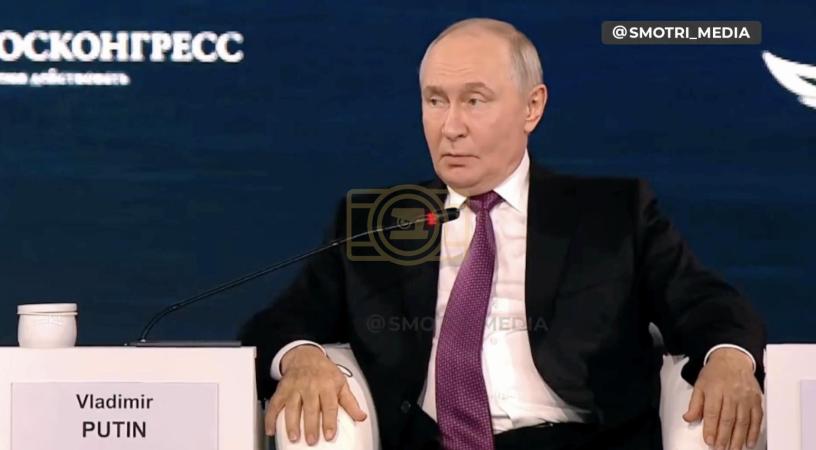
PEACE TALK FAILURE: Putin Declares Ukrainian Drone Warnings State Terrorism That Kills Negotiations
Gallery
Videos
Russian President Vladimir Putin has sharply condemned what he described as Ukrainian threats of attacks on civilian aircraft, labeling them a clear manifestation of state terrorism. In recent remarks, Putin stated that such threats seriously complicate the prospects for any bilateral peace talks with Kyiv. His comments came in direct response to warnings from Ukrainian President Volodymyr Zelensky that intensified Ukrainian drone strikes deep inside Russian territory are rendering the country’s airspace unsafe for civilian aviation. The exchange has further hardened positions on both sides at a moment when diplomatic openings already appeared limited.
Zelensky’s earlier statements prompted Ukraine to notify the International Civil Aviation Organization and led some foreign airlines to cancel or delay flights on routes involving Russian airspace. Putin seized on those developments to frame Ukraine’s actions as deliberate endangerment of civilian air travel. He argued that threatening the safety of passenger aircraft crosses a fundamental line and cannot be dismissed as ordinary wartime tactics. According to the Russian leader, this behavior removes the necessary conditions for meaningful negotiations between the two countries.
Putin went further by accusing Western nations of becoming accomplices to terrorism through their silence on the matter. He claimed that the lack of strong international condemnation of Ukraine’s warnings effectively enables and encourages the threats. This line of argument allows Moscow to present itself as the party seeking stability while portraying Kyiv and its backers as obstacles to peace. At the same time, Russia continues its own campaign of strikes against targets inside Ukraine, a reality that Ukrainian officials consistently highlight when rejecting Russian claims of restraint.
The dispute underscores how the air domain has become a central and highly sensitive theater in the ongoing conflict. Ukrainian drone operations inside Russia have expanded in range and frequency, forcing Moscow to confront vulnerabilities far from the front lines. In turn, Russian officials are using the civilian aviation issue to justify a harder diplomatic stance and to rally domestic and international support against what they call terrorist methods. The result is a deepening cycle of accusation and counter-accusation that leaves little room for compromise.
Peace talks have repeatedly stalled throughout the war, with each side citing the other’s actions as proof of bad faith. Putin’s latest statements reinforce the Kremlin’s position that meaningful negotiations cannot proceed while Ukraine issues warnings that affect civilian air traffic. Ukrainian leaders maintain that their drone campaign is a legitimate response to Russian aggression and that Russia itself has repeatedly targeted Ukrainian cities and infrastructure. The gap between these two narratives continues to widen.
As both nations dig in, the rhetoric around civilian aircraft safety adds a new and volatile dimension to an already protracted conflict. Putin’s decision to label the Ukrainian warnings as state terrorism signals that Moscow intends to use the issue as a lasting barrier to bilateral dialogue. Whether this stance hardens further or eventually gives way to pragmatic contacts will depend on developments on the battlefield and the calculations of leaders in Kyiv, Moscow, and Western capitals. For now, the path to negotiations appears more obstructed than before.