The Day After the Historic Visit of the Gedolei Admorim to the White House: A Chronological Overview of the Historic Visit

Gallery
**Historic Meeting in Washington: Gedolei Yisroel and Askanim Advocate for Klal Yisroel with Donald Trump and JD Vance**
A high-level delegation of prominent Admorim, Rabbanim, and askanim arrived in Washington, D.C., on private jets Tuesday morning for a historic meeting with former President Donald Trump and Vice Presidential candidate JD Vance.
The first to arrive was the Lakewood Rosh Yeshiva, Rav Malkiel Kotler Shlit”a, who was escorted to the Roosevelt Room alongside askan Reb Moshe Margareten. They were shortly followed by the Satmar Rebbe (Mahari”i) and the Bobover Rebbe. The Satmar Rebbe (Mahar”a) arrived next, followed by Reb Aharon Mendel Twersky, representing his father, the Skverer Rebbe. The Vizhnitzer Rebbe of Monsey arrived shortly after following a brief flight delay.
The Rabbonim were accompanied by several family members, including the Satmar Rav of Williamsburg, the Sigheter Rav, and Reb Chaim Sholom Halberstam, son of the Bobover Rebbe.
A formidable group of well-known askanim joined the delegation, including Reb Moshe David Niederman, Reb Gedaliah Szegedin, New Square Mayor Reb Yisroel Moshe Spitzer, Reb Yoel Rosenfeld of Bobov, Reb Yehuda Leib Zorger of Airmont, and Reb Yossi Gestetner, among others. Also present were the Rebbes' close gabbaim: Reb Moshe Friedman, Reb Chaim Shlomo Fischer, and Reb Chaim Goldfinger.
After clearing security, the delegation gathered in the Roosevelt Room for an extended meeting with senior officials, including Jared Kushner. Kushner warmly greeted the attendees, specifically recalling a time he hosted the Bobover Rebbe at his home.
Midway through the discussion, Vice Presidential nominee JD Vance entered the room. Reb Yossi Gestetner introduced the attendees, and the askanim immediately got to work raising several pressing community issues.
The conversation touched on the poor state of kosher food in the prison system. Reb Gedaliah Szegedin noted that the issue stems from budget constraints and proposed a practical solution: utilizing the massive commercial kitchens in Kiryas Joel to prepare the meals, which would save the government money. He requested Vance’s assistance in securing the necessary government approvals. The Satmar Rebbe (Mahari”i) then raised the issue of the brief 15-hour furloughs granted to inmates, explaining that the short timeframe does not allow them enough time to properly travel home for the Yomim Noraim.
Vance spoke highly of the Jewish community, expressing particular admiration for the beauty of large families and noting that he had just welcomed his fourth child. This provided a perfect segue for Reb Moshe David Niederman, who discussed the discrimination large families face regarding Section 8 housing assistance. Reb Yoel Rosenfeld lightheartedly pointed out to Vance that since he now has four children, it would be a great time to expand the program, which currently caps benefits at three children.
Other vital topics were brought to the table, including Maimonides Hospital (raised by Reb Yoel Rosenfeld), pidyon shvuyim (raised by Reb Yisroel Moshe Spitzer), and the pressing water infrastructure needs in Kiryas Joel (raised by Reb Gedaliah Szegedin).
During the conversation, Vance took an interest in the different types of levush worn by the Rabbonim. Reb Gedaliah Szegedin beautifully explained that the distinct clothing reflects the historical European regions of their ancestry—such as Poland, Hungary, Galicia, and Lithuania—and demonstrates how the Admorim meticulously preserve the traditions of previous generations. The discussion also covered the urgent need to protect and preserve batei chaim in Europe, specifically in Vilna and Poland, a cause Vance promised to assist with before departing the room.
While waiting for the former President, the Rabbonim spent the time sharing divrei Torah and sippurei tzaddikim. Observers noted a remarkably warm and historic exchange between the Satmar brothers, with the Satmar Rebbe (Mahar”a) wishing a hearty mazel tov to the Satmar Rebbe (Mahari”i) on the simchas taking place in his family that evening.
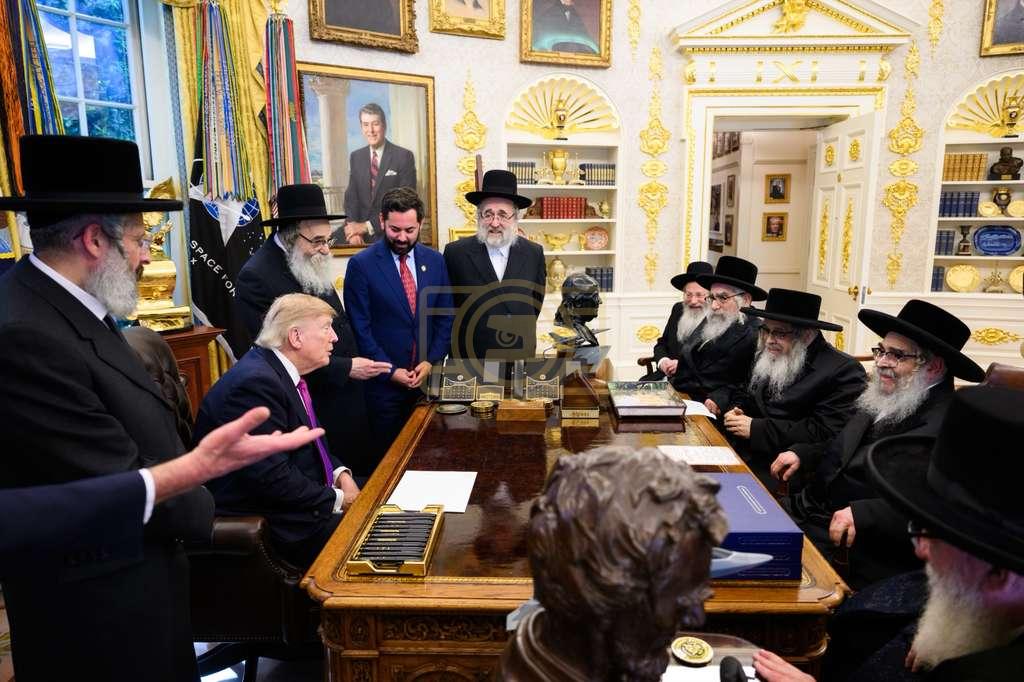
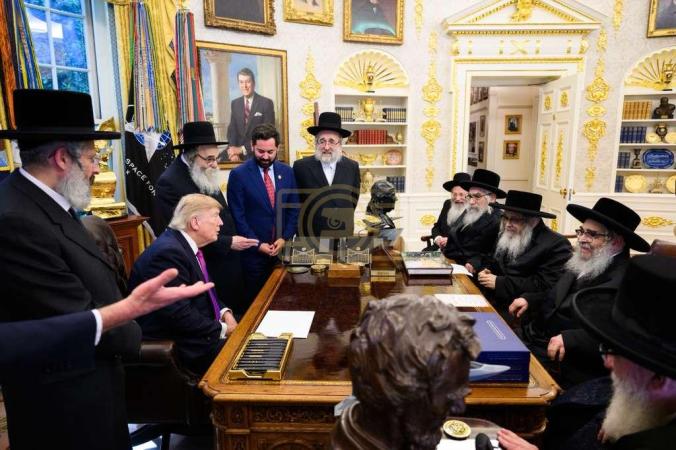
The delegation was then escorted to meet with Donald Trump. The meeting began with a 10-minute private audience between Trump and the Satmar Rebbe (Mahar”a), during which the Rebbe discussed pidyon shvuyim and the ongoing gezeiras hagiyus in Eretz Yisroel.
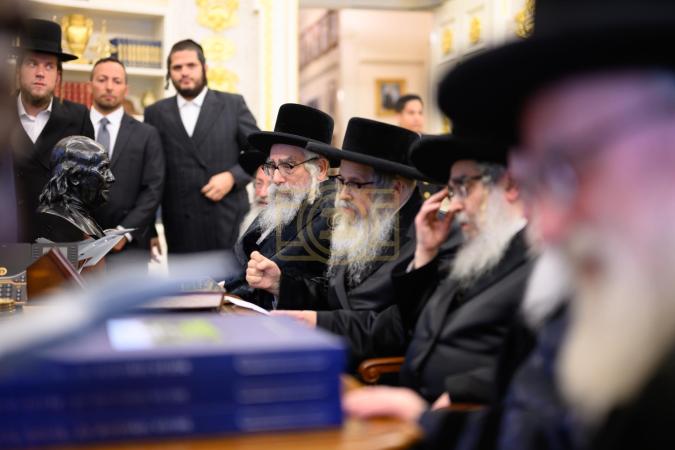
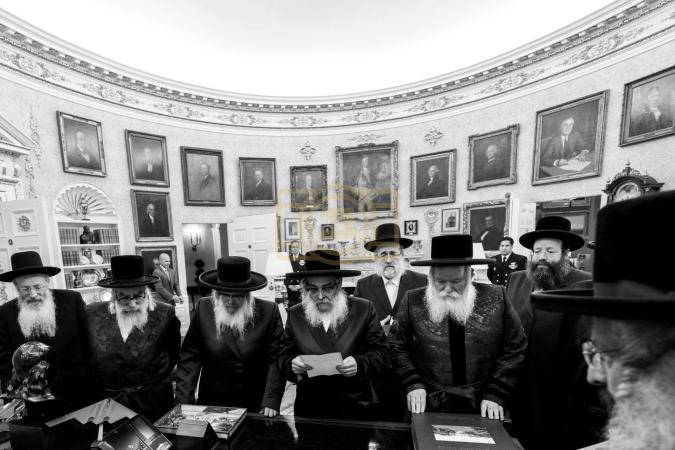
Following this, all the Admorim and lead askanim entered the room. While the rest of the entourage remained in the Roosevelt Room, the door was left open so they could listen in. The Rabbonim were seated directly across from Trump’s desk. Trump immediately called for Jared Kushner, stating, "He must be here when such great guests arrive."
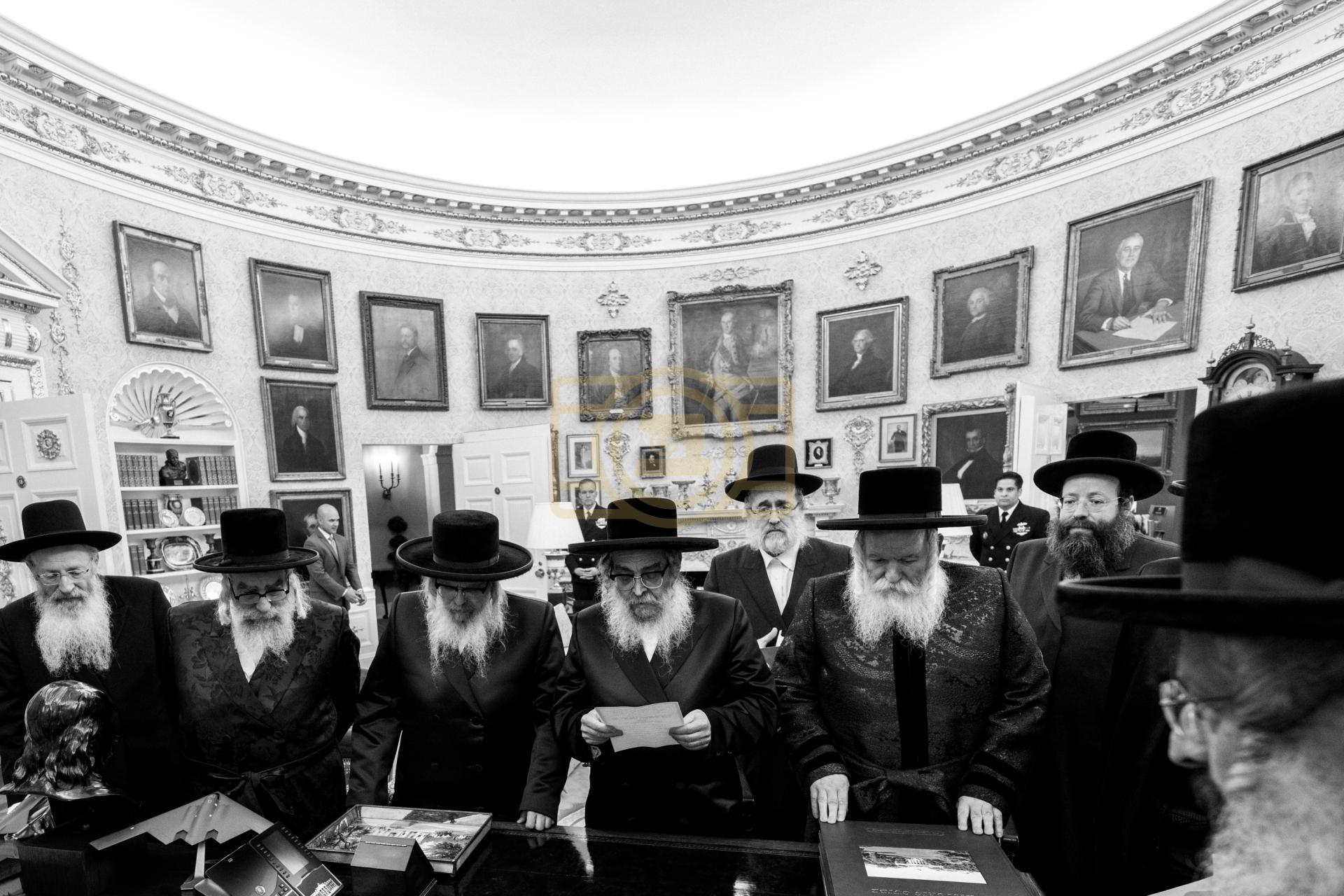
The Satmar Rebbe (Mahar”a) recited the bracha of *Hanosein Teshua*, which was translated into English by Reb Gedaliah Szegedin. Trump smiled and asked Kushner if he understood Lashon Kodesh, to which Kushner replied that he understood about half.
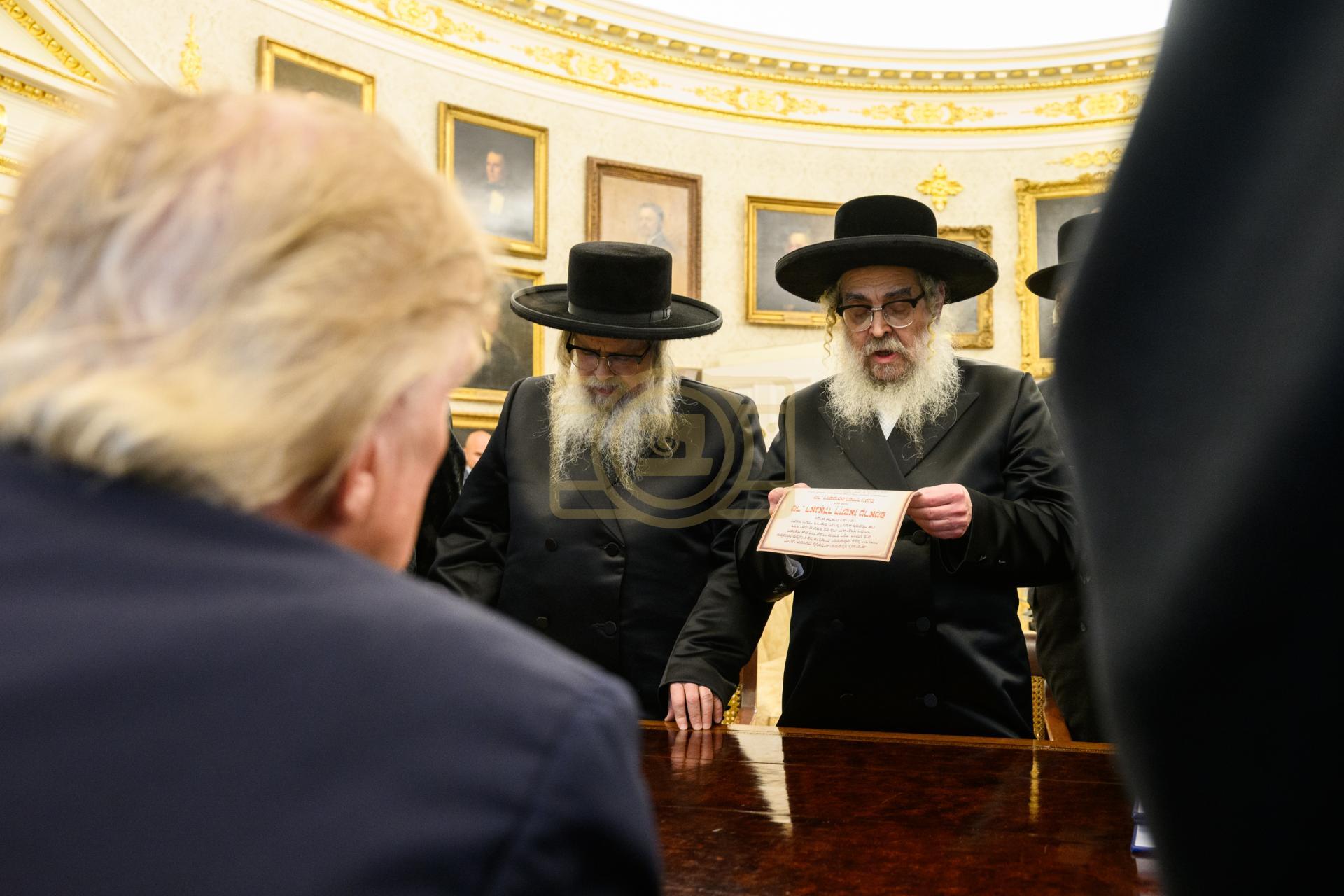
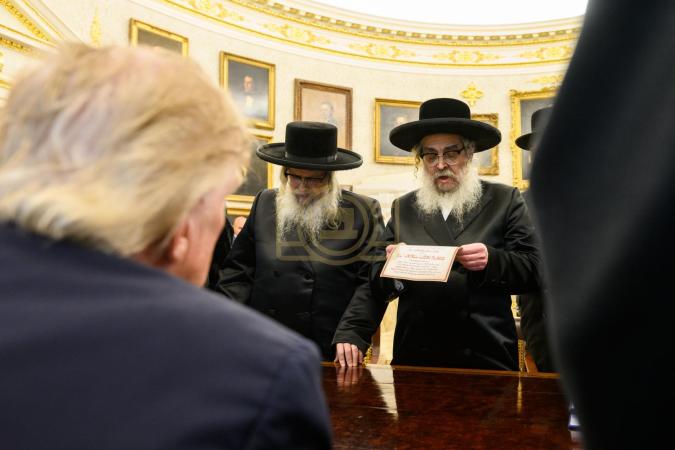
After greetings from Trump and Congressman Mike Lawler, the Satmar Rebbe (Mahar”a) thanked the former President for his crucial support in keeping Batei Medrashim open during the COVID-19 pandemic. Reb Aharon Mendel Twersky then delivered a personal letter from the Skverer Rebbe, and Rav Malkiel Kotler presented a letter of his own.
Despite reported pressure from Israeli organizations, the Rabbonim presented Trump with a sharp, unequivocal letter drafted by Merkaz Ezra V'Yeutz. The letter highlighted the plight of 100,000 yeshiva bochurim in Eretz Yisroel who are currently suffering, noting that some are sitting in prison simply for wanting to practice their religion. The Rabbonim urged Trump—as a leader known for championing religious freedom—to use his influence to pressure the Israeli government to follow America’s example of protecting religious rights and to cease its persecution of Chareidim.
In an interesting moment during the conversation, Trump suddenly asked the Satmar Rebbe (Mahar”a) for the paper containing his private talking points, which the former President then placed into his personal desk drawer.
The Satmar Rebbe (Mahari”i) then spoke in English, thanking Trump for his ongoing help to the Jewish community, particularly his efforts on behalf of childless families, and strongly reiterated the crisis facing yeshiva bochurim. The Bobover Rebbe had prepared to speak about the Polish batei chaim and Maimonides Hospital, but time constraints ultimately prevented it.
The conversation took an emotional turn when Trump recalled his commutation of Reb Sholom Mordechai Rubashkin’s sentence. Trump noted that even after authorizing major military operations, he had never received such a massive, warm outpouring of gratitude. Reb Yoel Rosenfeld described to Trump how Jews were literally dancing in the streets upon hearing the news. Trump acknowledged the severity of the case, stating he understood that the bitter 28-year sentence was driven by pure antisemitism.
As the meeting drew to a close, the remaining askanim were invited into the room. Reb Moshe Margareten stepped forward to thank Trump, specifically praising Congressman Mike Lawler. When Trump asked the Rabbonim if the community truly supports Lawler, the askanim confirmed that in previous elections, both Trump and Lawler received between 98 and 100 percent of the vote in heimishe enclaves like Kiryas Joel and New Square.
After about half an hour, the historic visit concluded. On the way out, Rav Malkiel Kotler handed Trump one final private request signed by all the Rabbonim. Trump distributed presidential coins to the attendees as mementos. The Rabbonim bid the former President farewell, wished him a "Kesiva V'Chasima Tova," and departed for the airports to return home.