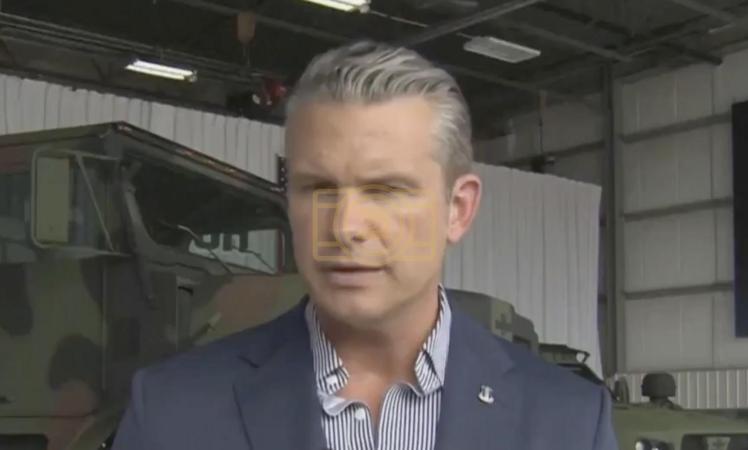
HEGSETH WARNS IRAN: “We foreclosing using kinetic strikes anywhere"

Gallery
Videos
U.S. Secretary of War Pete Hegseth delivered a blunt warning to Iran, saying Washington is “by no means” ruling out the use of kinetic strikes in the Strait of Hormuz or elsewhere around Iran. Hegseth said the United States would use military force if necessary, particularly if Iran threatens American forces or “overplay[s] their hand.” His remarks make clear that the Trump administration’s current emphasis on economic pressure does not mean the military option has been taken off the table.
Hegseth said economic pressure is currently hurting Iran the most as Washington intensifies its campaign against Tehran. The administration has launched a major sanctions effort aimed at cutting Iran off from financial networks and revenue sources, while Hegseth emphasized that military capabilities remain available if circumstances change. The message from Washington is therefore one of dual pressure: squeeze Iran economically while maintaining the ability to respond militarily.
The Strait of Hormuz remains at the center of the confrontation because it is one of the world’s most strategically important maritime chokepoints. Hegseth claimed that U.S. forces maintain control of the waterway and have significantly degraded Iran’s naval, radar, missile and surveillance capabilities, while saying Washington can protect commercial shipping. Any renewed military confrontation around the strait could therefore carry consequences well beyond the region because of its importance to international energy and shipping markets.
The warning comes as Washington seeks to increase pressure on Tehran without necessarily committing to another immediate military operation. Hegseth stressed that the United States would respond if Iran interferes with American forces, making the credibility of the military threat an important part of the administration’s broader strategy. At the same time, the administration is pushing sanctions and economic isolation in an effort to force Tehran toward negotiations over its nuclear program.
For Iran, Hegseth’s statement leaves little ambiguity about Washington’s posture: economic warfare may currently be the preferred tool, but military force remains an active option. The most important question now is whether Tehran responds to the mounting economic pressure by negotiating or instead takes actions that could trigger another round of U.S. strikes. With the Strait of Hormuz still at the heart of the confrontation, even a limited escalation could quickly become a much larger international crisis.