TARGETING TEHRAN'S ARSENAL: US Strike Kills Four in Iran's Missile Heartland
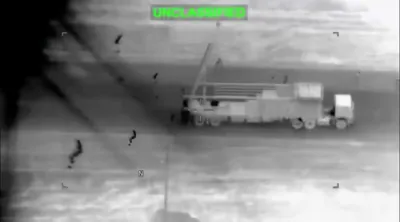
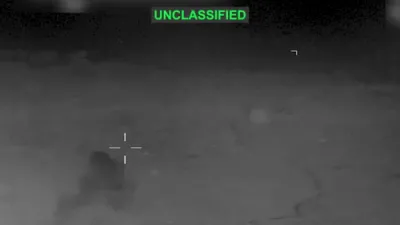
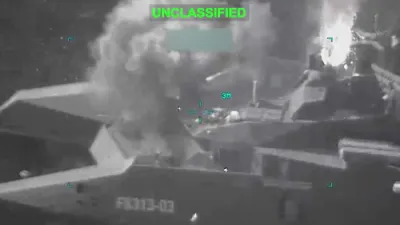
Iran's Islamic Revolutionary Guard Corps confirmed that four members of its Aerospace Force were killed overnight when U.S. forces struck a target in Kermanshah province, a mountainous region in western Iran long known as one of the country's most important ballistic missile hubs. The IRGC identified the four fallen personnel by name, Reza Mohammadi, Shahram Jafari, Alireza Shakiba, and Jafar Kahrizi, in a statement carried by Iran's semi-official Fars News Agency, describing them as having been "martyred" in what it called an attack by the U.S. regime. Unclassified thermal imaging footage circulating from the strike shows a truck-mounted missile launcher being destroyed in a series of large secondary explosions, the kind of blast typically associated with the detonation of stored munitions or fuel rather than the initial impact alone. Kermanshah has repeatedly come under fire throughout the broader air campaign against Iran, owing largely to its role as a staging ground for the kinds of mobile missile systems Iran has used to launch strikes against Israel and American positions across the region.
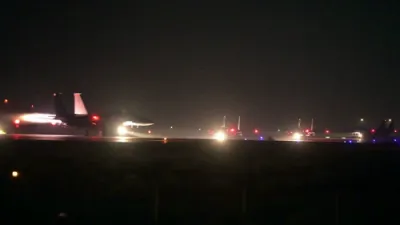
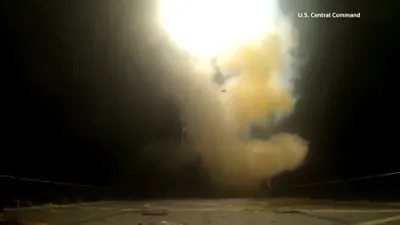
The Kermanshah strike wasn't an isolated event. It came as part of a broader wave of U.S. attacks that also killed three members of Iran's Basij paramilitary force on Lavan Island, an energy-producing island off Iran's southern coast, along with additional casualties reported in Iran's Khuzestan province. Altogether, Iranian officials say the death toll from the latest 24-hour stretch of U.S. strikes across the country has climbed to at least 18, a figure that includes both military personnel and civilians caught in the crossfire. Iranian authorities separately reported that a strike on a wedding ceremony in the Sirik district of Hormozgan province wounded roughly 70 civilians and killed several others, an incident that has drawn sharp condemnation from Tehran even as U.S. officials maintain that their targeting has focused specifically on IRGC military infrastructure.
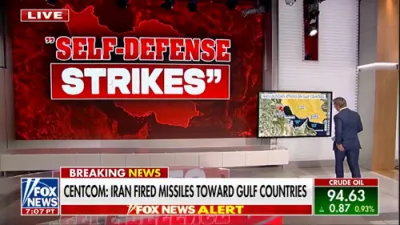
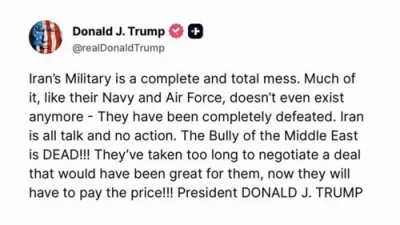
The exchange marks one of the most intense escalations in weeks between Washington and Tehran, arriving after President Trump accused Iran of violating an earlier ceasefire agreement and ordered a fresh round of strikes in response. Iran didn't take the attacks lying down. In retaliation, Iranian forces launched missile and drone strikes against American military positions and allied territory across the region, hitting targets in Jordan, Kuwait, and Bahrain, while air-raid sirens sounded in multiple Gulf cities as the region braced for further escalation. Jordan reported an intense ballistic missile barrage against Camp Titin, while Kuwait and Bahrain both reported drone and missile activity aimed at disrupting American operations in the area. Regional powers, including Saudi Arabia and Qatar, moved quickly to condemn Iran's retaliatory strikes as violations of sovereignty and international law.
Kermanshah's significance in this conflict goes back well before this latest strike. The province is home to a heavily fortified underground missile facility that was first struck and partially destroyed during the earlier Twelve-Day War, an assault that collapsed multiple entry points and damaged several missile storage buildings according to independent battle-damage assessments. Its continued relevance as a target throughout the ongoing campaign underscores just how central the region's missile infrastructure remains to Iran's overall military capability, and why U.S. and allied forces have returned to strike it repeatedly as the broader conflict has dragged on. With both sides now trading strikes across multiple fronts simultaneously, from Iran's western provinces to American bases scattered throughout the Gulf, there is little indication that this latest escalation will de-escalate anytime soon.