HUD CRACKS DOWN ON HOUSING ELIGIBILITY: Trump Administration Moves to End Longstanding Mixed-Status Assistance Rules
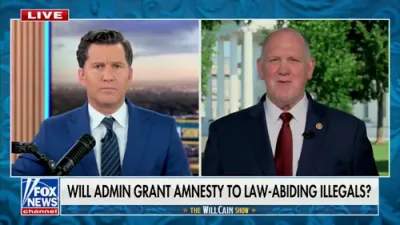
Housing and Urban Development Secretary Scott Turner is defending a major new federal rule designed to tighten immigration eligibility requirements for taxpayer-funded housing programs and prevent assistance from reaching people who do not qualify. During a Fox Business interview, Turner described the policy as closing a decades-old loophole that allowed mixed-status households to continue receiving prorated housing assistance when some family members could not establish eligible immigration status. The final rule, published on November 12, 2026, requires every household member covered by Section 214 of the Housing and Community Development Act of 1980 to verify U.S. citizenship or an eligible immigration status, regardless of age. It also limits prorated assistance for mixed-status families, making that arrangement temporary while officials complete eligibility checks rather than allowing it to continue indefinitely. The changes follow a January HUD and Department of Homeland Security audit that identified nearly 200,000 tenants requiring additional eligibility verification, nearly 25,000 deceased tenant records and approximately 6,000 tenants identified as ineligible non-Americans. Turner said the administration is determined to protect limited housing resources and prioritize Americans and other legally eligible recipients, including veterans, elderly residents and families waiting for assistance.
The new requirements are scheduled to take effect on December 14, 2026, giving housing authorities and property owners a new framework for checking tenant eligibility and addressing unresolved cases. Under HUD's implementation guidance, members of mixed-status households who have not previously submitted the required documentation generally have 90 days after the effective date to provide evidence of citizenship or eligible immigration status. Other affected households must submit documentation by their next annual or interim recertification, while additional time may be granted in qualifying circumstances. HUD estimates that the changes could redirect up to $218 million annually toward fully eligible households, although that figure represents a projected increase in available housing subsidies rather than money already recovered from proven fraud. The policy has also triggered legal opposition, with 21 states and Pennsylvania's governor suing the federal government over concerns that eligible American family members, including children, could lose housing assistance because another household member lacks qualifying status. The dispute now places the administration's effort to strengthen immigration verification against concerns about family unity and housing stability, as the December implementation date approaches.