🚨 WHEN SYSTEMS FAIL: Power, Water and Supply Disruptions Put Emergency Preparedness Back in the Global Spotlight
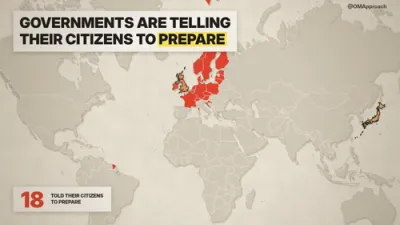
Governments are increasingly encouraging households to prepare for emergencies, highlighting how quickly everyday necessities can become difficult to access when essential infrastructure fails. Britain's "Be Ready" campaign recommends maintaining enough basic supplies to survive at least three days of disruption, while Japan's disaster minister is urging families to keep a minimum of three days' provisions, preferably enough for a full week. Meanwhile, the Pentagon's reported FORTRESS initiative aims to strengthen the independence of major continental US military installations, with a target of operating for at least 90 days without relying on civilian electricity, water, fuel or external supply networks. Defense Secretary Pete Hegseth has also emphasized the importance of military bases generating their own electricity independently of the civilian power grid. The contrast between three days of recommended household supplies and 90 days of military resilience underscores how seriously national security planners are approaching the possibility of prolonged infrastructure disruptions.
The underlying concern extends beyond military conflict to the everyday systems that keep communities functioning, including electricity networks, telecommunications, transportation and food distribution. A prolonged power outage can interrupt refrigeration, disable certain medical equipment and disrupt communications, while damaged roads or supply routes can delay emergency assistance. That is why preparedness recommendations emphasize practical necessities such as drinking water, food that does not require cooking, essential medications, flashlights, battery-powered radios and a reliable family communication plan. Households are encouraged to build their emergency supplies gradually and according to their financial circumstances rather than making expensive purchases all at once. Preparedness also involves looking beyond individual needs by checking on elderly neighbors and helping families whose members depend on electricity-powered medical equipment. The broader message is that emergency readiness is not simply about surviving a crisis but also about maintaining the ability to support others when normal services are disrupted.