🚨 BREAKING - MASSIVE EXPLOSIVE DETONATION IN IOWA: Army Targets Nearly Five Tons of Unstable Lead Azide at Ammunition Plant
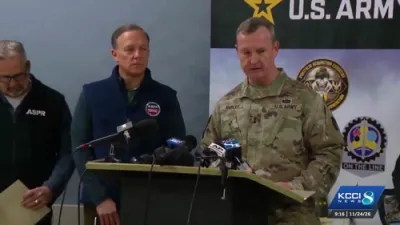
The U.S. Army is carrying out a highly controlled operation to destroy nearly five tons of dangerously degraded explosives at the Iowa Army Ammunition Plant in Middletown, Iowa. The operation involves 68 barrels containing more than 9,700 pounds of lead azide, an extremely sensitive explosive compound that can detonate from relatively minor friction, vibration, heat or physical shock. Military explosive ordnance disposal specialists from the Army's 71st Ordnance Group were assigned to conduct the in-place destruction after officials determined that moving the barrels or attempting chemical neutralization would create unacceptable risks. The controlled detonation was scheduled for approximately 9 a.m. Central Time on November 25, following several delays over safety preparations and public concerns. Residents received emergency notifications warning that the blast could produce powerful noise, ground vibrations and a dust plume containing potentially hazardous lead particles. The Army coordinated the operation with FEMA, the Environmental Protection Agency, the Department of Health and Human Services and state and local authorities to reduce risks to nearby communities.
The emergency alert instructed people within a broader area extending up to 20 miles from the facility to remain indoors, close windows and doors, and limit exposure to potentially airborne lead dust. A separate recommended relocation zone covers Middletown and surrounding areas within a five-mile corridor extending southwest of the ammunition plant, where FEMA is providing temporary lodging, transportation, food and other assistance. To reduce the spread of hazardous particles, military officials prepared additional protective barriers and planned to use water, specialized gels and foam during the operation. Environmental monitoring teams are also expected to collect air, soil, water and surface samples to assess possible contamination after the blast. Health officials have emphasized that lead exposure is a particular concern for young children and pregnant women, even though the operation was designed to minimize the release and spread of lead-containing dust. The immediate priority is to complete the disposal safely, determine where any particles may have settled and provide affected residents with reliable information and assistance.