DRAINED BUT DANGEROUS: Finland's Leader Says Russia Can't Fight Two Wars
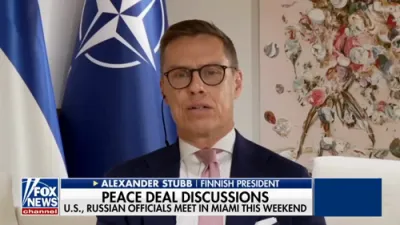
Finnish President Alexander Stubb has pushed back against warnings that Russia could be preparing to attack a NATO country, telling Germany's Bild newspaper that Moscow simply doesn't have the soldiers to open a second front while still fighting in Ukraine. Stubb pointed to steep Russian losses on the battlefield, citing figures showing Moscow is losing roughly 30,000 to 35,000 troops a month while only recruiting around 27,000 replacements, a gap that he says is steadily eroding the country's combat manpower. "I simply don't see that they could now suddenly mobilize forces for two fronts," he said, while stressing that NATO's combined conventional, missile, and nuclear deterrent makes testing the alliance's resolve a losing proposition for any power. Even so, Stubb was careful not to dismiss the danger entirely, noting that total certainty is impossible and that NATO members should still prepare for the worst in order to prevent it.
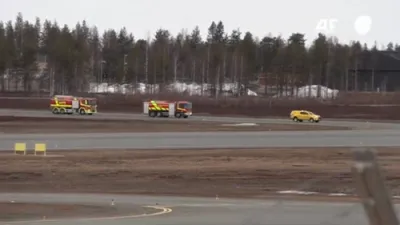
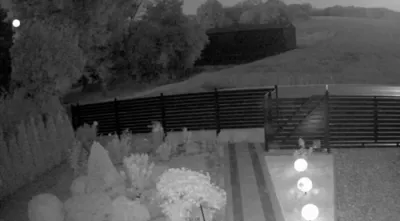
Stubb's comments directly challenge recent warnings from Germany's Defense Ministry and the Bundeswehr, which have assessed that Russia could be capable of testing NATO's defenses by 2029. He argued he has seen no intelligence or facts supporting that specific timeline, adding that anyone claiming to know exactly when such an attack might happen would need a crystal ball. Instead, Stubb suggested that Russia's real strategy right now is a war of nerves rather than tanks, using information warfare to keep Europeans anxiously debating hypothetical invasion scenarios rather than focusing on tangible defense needs. That framing lines up with a wave of unexplained incidents across Europe in recent weeks, including an explosive-laden drone found near a Ukrainian cargo plane at Germany's Leipzig/Halle airport, an arson attack on an Estonian defense contractor, and a discovered weapons cache on the outskirts of Berlin.
German Chancellor Friedrich Merz has signaled that Berlin is preparing to formally place blame on Moscow for the Leipzig drone incident, warning that those behind such hybrid attacks "will pay for it," even though officials have stopped short of publicly presenting direct evidence tying the operation to the Russian state. Meanwhile, concerns have grown over Europe's own military readiness, with American Patriot and ATACMS missile stockpiles on the continent reportedly stretched thin after being redirected to support operations tied to the Iran conflict, with replenishment potentially taking years. That shortfall has fueled debate among U.S. lawmakers, including Senator Roger Wicker, about whether current force posture in Europe adequately accounts for the possibility of a weakened but still unpredictable Russian leadership lashing out in unconventional ways.
Taken together, Stubb's assessment paints a nuanced picture: Russia may lack the raw manpower for a conventional second front, but that doesn't mean Europe is free from risk. The real question emerging from these overlapping developments isn't whether Russia can mobilize an army large enough to invade another country, but whether it even needs to, given the disruptive potential of drone incursions, sabotage, and arson campaigns that require far fewer resources than traditional warfare. As Germany moves toward formally attributing recent incidents to Moscow and U.S. officials fly to Europe to caution against further escalation near the Baltics, the debate over Russia's next move appears to be shifting away from tank counts and toward a murkier, harder-to-track form of confrontation.