25 YEARS LATER: 9/11 Case Hits New Snag as Confession Is Excluded
A U.S. military judge has dealt a significant blow to the long-running prosecution of alleged September 11 mastermind Khalid Sheikh Mohammed, ruling that his 2007 confessions to FBI agents at Guantanamo Bay cannot be used against him when his trial finally begins in 2028. Air Force Lt. Col. Michael Schrama, who oversees the military commission proceedings, concluded that prosecutors failed to prove Mohammed's statements were given voluntarily, finding instead that they remained tainted by the coercive treatment he endured during years of earlier CIA custody. Prosecutors had already excluded Mohammed's original CIA interrogation statements, obtained after he was subjected to 183 rounds of waterboarding, but Schrama went further by extending that exclusion to his later FBI questioning as well. The decision strips prosecutors of what they had previously described as some of the most crucial evidence in the government's case.
In his 45-page ruling, Schrama pointed to what he called an "unbroken continuation" of the CIA's psychological conditioning and severe coercion that persisted even after Mohammed's 2006 transfer to Guantanamo Bay and his subsequent 2007 questioning by FBI agents. The judge also found that FBI agents deliberately avoided clearly informing Mohammed that he had the right to remain silent, the right to consult an attorney, and that anything he said could later be used against him in a trial. Mohammed had reportedly told a military tribunal in 2007 that he was responsible for the September 11 operation "from A to Z," a statement prosecutors had hoped to use as central evidence. With that avenue now closed, the government's case against him faces a considerably steeper path forward.
The timing of the ruling adds another layer of complication to an already extraordinarily long legal saga, arriving just days after Schrama set a formal trial date of June 5, 2028, for Mohammed and three co-defendants. That date already reflects a case that has dragged on for more than two decades, stretching back to Mohammed's capture in Pakistan in 2003 and his years of detention prior to formal charges. Legal experts note the ruling does not affect Mohammed's ongoing detention status, since the U.S. maintains it can hold him indefinitely as a wartime detainee regardless of whether he is ever convicted at trial. Prosecutors are expected to consider appealing the decision, a move that could push the already-delayed trial date back even further.
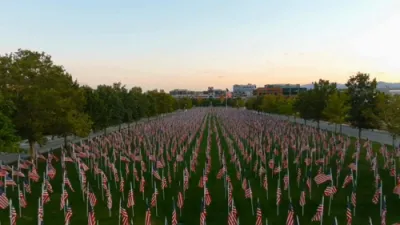
The ruling arrives just ahead of the 25th anniversary of the September 11 attacks, a grim reminder for victims' families who have waited decades for a resolution that continues to slip further out of reach. Aging survivors and relatives of those killed have repeatedly expressed concern that they may not live to see the case reach a final verdict, given the case's history of legal challenges tied to the treatment detainees received in CIA custody. This is not the first time evidence in the case has been excluded on similar grounds; an earlier judge previously ruled statements from Mohammed's nephew, Ammar al-Baluchi, inadmissible for comparable reasons. As the case moves toward its 2028 trial date, the exclusion of Mohammed's FBI confession underscores how deeply the legacy of the post-9/11 interrogation program continues to shape, and complicate, the pursuit of justice more than two decades after the attacks themselves.