DARK UNIVERSE UNLOCKED: Roman Telescope Soars Into Space Ahead of Schedule
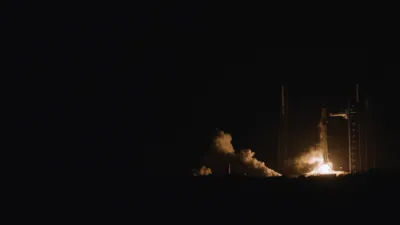
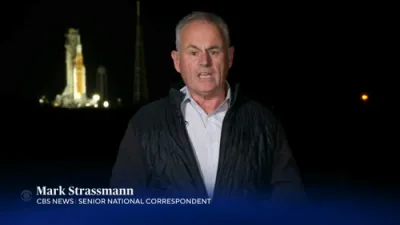
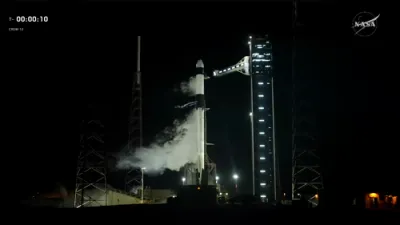
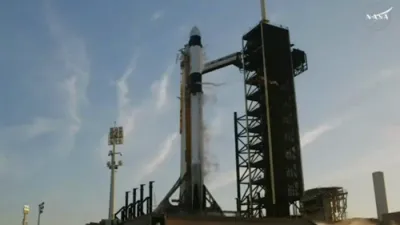
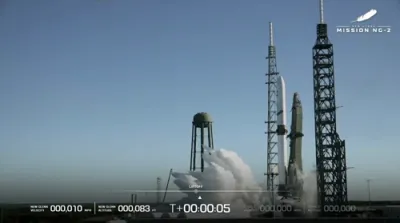
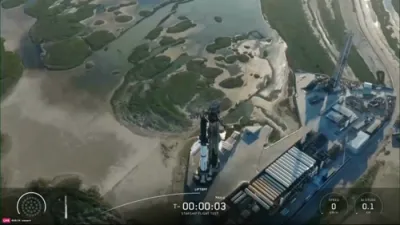
NASA's Nancy Grace Roman Space Telescope launched successfully on Sunday, August 30, lifting off at 7:26 a.m. EDT aboard a SpaceX Falcon Heavy rocket from Launch Complex 39A at Kennedy Space Center. The observatory is now on a three-month, roughly one-million-mile journey to its final position at the second Lagrange point, about 1.5 million kilometers from Earth, where it will orbit alongside the James Webb Space Telescope. The mission had actually been running ahead of schedule for months, moving up from an original spring 2027 target to launch nearly nine months early. NASA anticipates releasing Roman's first images by early 2027, once the telescope reaches its final orbit and completes commissioning.
What sets Roman apart from Hubble isn't a bigger mirror, it's actually the same 2.4-meter diameter, but a dramatically wider view of the sky. Roman's field of view is over 100 times larger than Hubble's, meaning a single exposure can capture the equivalent of about 100 Hubble images at once. That leap in coverage is expected to let Roman survey more sky in its first five years than Hubble managed across three decades of observations. The telescope will also send back an enormous amount of data, roughly 1.4 terabytes per day, making it the highest data-rate astrophysics mission NASA has ever flown.
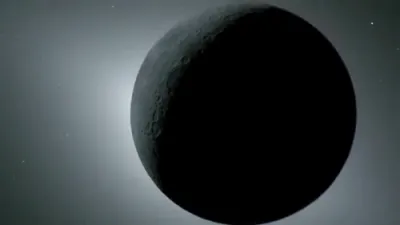
Roman's science goals center on some of the biggest open questions in astronomy: the nature of dark energy and dark matter, and the search for new worlds. Its wide-field surveys will track how dark matter and dark energy have shaped the growth and movement of millions of galaxies over cosmic time, while a specialized coronagraph instrument aboard the telescope will attempt to directly image exoplanets. That instrument works by blocking out a star's light, similar to shielding your eyes from the sun to see something faint beside it, allowing Roman to potentially detect planets up to 10 billion times dimmer than the stars they orbit. Mission scientists have also said Roman could capture close to 100,000 cosmic explosions over its lifetime, offering new insight into everything from black hole physics to the expansion of the universe.
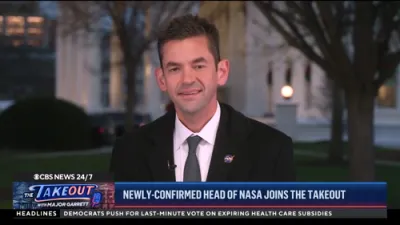
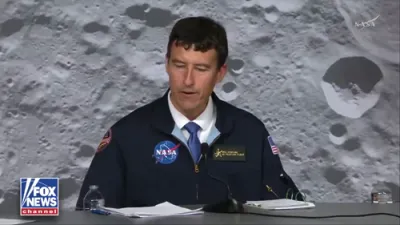
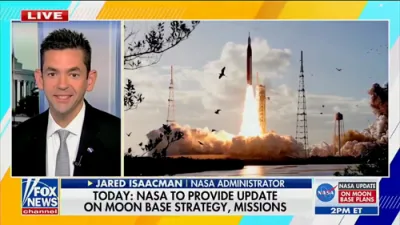
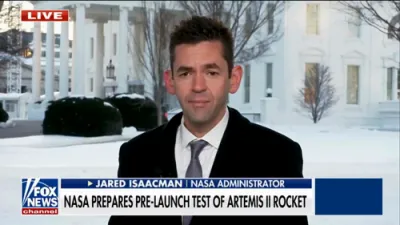
The telescope is managed by NASA's Goddard Space Flight Center, with major contributions from the Jet Propulsion Laboratory, the Space Telescope Science Institute, and international partners including the European Space Agency, Japan's JAXA, and Germany's Max Planck Institute for Astronomy. President Donald Trump reportedly called into NASA's post-launch press conference to congratulate the team, according to NASA Administrator Jared Isaacman. With Hubble having opened humanity's eyes to the broader universe and Webb pushing into the era of the earliest galaxies, Roman is now positioned as the next major step, built not just to take snapshots of the cosmos but to map its large-scale structure and evolution in unprecedented detail.