FRONTLINE FOOTAGE: Fox News Reveals Blast-by-Blast Strikes on Iran's Ships
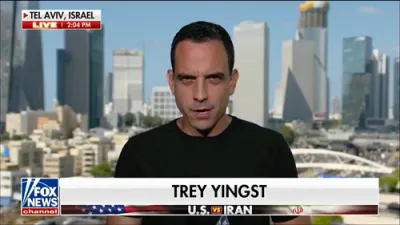
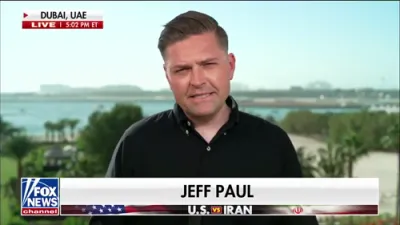
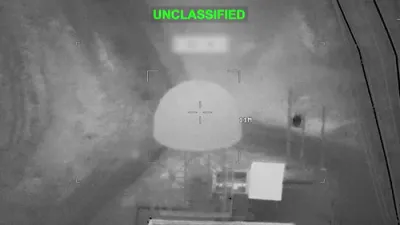
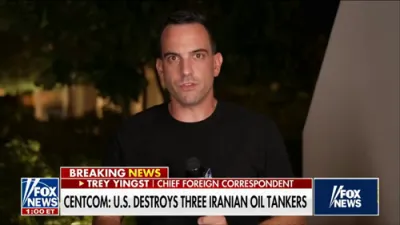
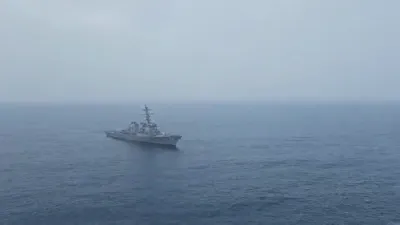
Reporting live from the Gulf, Fox News chief foreign correspondent Trey Yingst delivered an on-the-ground account of one of the most dramatic escalations yet in the ongoing U.S.-Iran standoff. U.S. forces struck three Iranian oil tankers after the Islamic Revolutionary Guard Corps launched ballistic missiles at a U.S. aircraft carrier and a guided-missile destroyer operating in the region. Both American vessels successfully evaded the incoming missiles, and CENTCOM confirmed there were no U.S. casualties from the attempted strike. Yingst's broadcast paired live commentary with unclassified imagery released by CENTCOM, giving viewers a rare, direct look at the retaliation as it was unfolding rather than through secondhand reports.
The footage aired by Fox News showed explosions, thick smoke, and fire engulfing the targeted vessels: the M/T Downy near Kharg Island, the M/T Stark 1 near the port city of Jask, and the M/T Kylo out in the Gulf of Oman. According to CENTCOM, the Downy and Stark 1 were permanently disabled, while the unladen Kylo was completely destroyed after being struck in multiple critical locations, its crew having been ordered to abandon ship beforehand. All three vessels, U.S. officials say, are tied to a multibillion-dollar shadow network that generates revenue for the IRGC and its regional proxies, making them high-value targets beyond their immediate military significance. The scale of destruction visible in the broadcast underscored just how far Washington was willing to go in response to a failed missile attack.
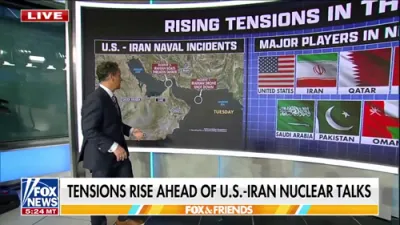
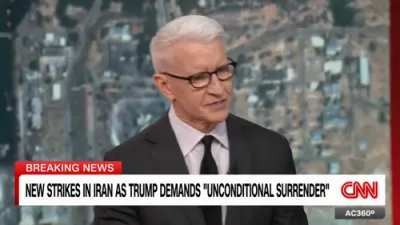
CENTCOM has framed the strikes explicitly as an economic punishment strategy, one meant to make any future Iranian aggression carry a steeper price than the attack that provoked it. The retaliation comes amid a broader and increasingly volatile struggle over control of shipping through the Strait of Hormuz, a waterway critical to global oil flows that has repeatedly become a flashpoint between the two nations. Iran, for its part, has claimed it carried out retaliatory missile strikes on vessels of its own, though those claims have not been independently confirmed by outside observers. That gap between official Iranian statements and verified reporting has become a recurring feature of this conflict, with both sides often offering competing narratives about what actually happened in any given exchange.
For correspondents like Yingst reporting from the region, verifying the human and material toll of these strikes in real time remains a persistent challenge, even with CENTCOM's own footage providing visual confirmation of the tanker attacks. What is clear is that the exchange marks a serious deepening of hostilities following a month of relative calm between Washington and Tehran. With missiles now being fired at American warships and the U.S. answering with direct strikes on Iranian economic assets, the situation in the Gulf appears to be entering a more dangerous and unpredictable phase, one where each side's response risks provoking an even larger reaction from the other.