HISTORY MADE: US Sea Drones Blast Iranian Sub Base In Combat First
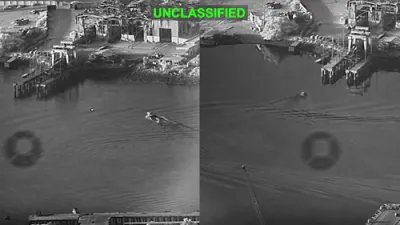
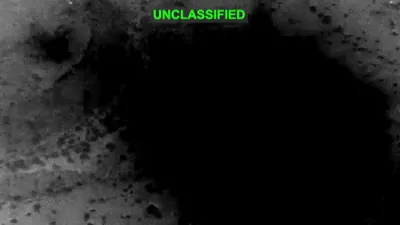
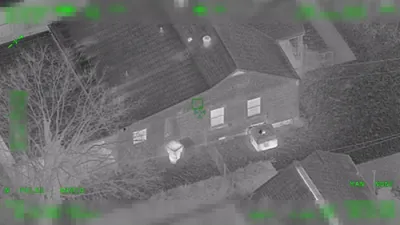
In a first for American military history, U.S. Central Command used three Saronic Corsair unmanned surface vessels to strike a submarine and ship maintenance facility at Iran's Bandar Abbas Naval Base in July 2026. CENTCOM confirmed the autonomous, low-speed drone boats closed in on a raised dock and detonated near a docked Ghadir-class midget submarine, with released footage showing the Corsairs approaching from multiple angles before large explosions and smoke engulfed the pier. The strike marked the first combat employment of American sea drones, following the same platform's use weeks earlier to rescue two U.S. Army crew members from a downed Apache helicopter near Oman's coast. CENTCOM said the operation degraded Iran's ability to keep threatening commercial shipping around the Strait of Hormuz.
Officials have framed the strike as proof of concept for a new acquisition approach inside the Pentagon, one built around fast-moving commercial defense companies like Saronic rather than traditional, slower defense contractors. The Corsair, a roughly 24-foot composite-hull craft capable of ranging out to 1,000 nautical miles while carrying up to a thousand pounds of payload, was built and scaled rapidly enough that the company had already produced hundreds of units before this mission. The message from defense leadership has been blunt: American warfighters should never have to enter a fair fight, and cheap, mass-producible autonomous weapons are increasingly seen as the way to guarantee that edge. The Bandar Abbas strike adds sea drones to a growing list of unmanned systems, alongside aerial and ground platforms, that the U.S. military is folding into frontline combat operations.