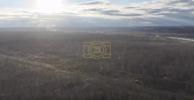

New footage from Ukraine’s front lines reveals an unexpected and growing environmental crisis: tens of thousands of tons of fiber-optic cable now blanket the battlefields, forming a dense web of debris left behind by the country’s rapid adoption of fiber-optic-guided FPV drones. This technology, initially hailed as a decisive innovation against Russian electronic warfare, has produced a staggering volume of waste that experts warn could take decades to remove.
According to estimates cited in recent reporting, nearly 2,900 kilometers of fiber-optic cable are laid for every single kilometer of front line. The numbers reflect the sheer scale of Ukraine’s drone operations since mid-2025, when engineers introduced fiber-optic control lines to bypass Russian jamming systems. The thin spools of cable—sometimes stretching tens of kilometers per flight—enabled precise, unjammable control of drones at ranges of up to 50 kilometers.
But the downside is now becoming painfully visible. Each drone leaves behind its cable upon impact, crash, or mission completion. With thousands of drones deployed weekly, the cumulative effect has transformed large stretches of the front into tangled fields of synthetic debris. Officials report that the waste is so widespread it can endanger movement, damage equipment, contaminate soil, and complicate future agricultural restoration.
Environmental specialists warn that the durability of the fiber-optic materials makes the cleanup a generational project. The cables do not degrade quickly, are difficult to collect once buried or entangled in vegetation, and often lie mixed with unexploded ordnance, mines, and other wartime hazards. Current projections suggest that even with sustained postwar efforts, clearing the terrain could take several decades.
For Ukraine, the problem underscores a bitter paradox: the very tools that helped sustain its defense have created a long-term environmental footprint that will outlive the conflict itself. As the war continues, the volume of cable waste grows daily, leaving behind a complex legacy that future reconstruction teams—and Ukrainian civilians—will be forced to confront long after the guns fall silent.
גאלערי
ווידעאס