טראמפ שטעלט פאראויס די נוקלעארע אגענדע מיט א מיקרארעאקטאר לופטליפט.
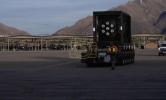
The successful airlift and unloading of a next-generation micro nuclear reactor at Hill Air Force Base marks a significant milestone in the Trump administration’s push to modernize U.S. military energy infrastructure. Transported aboard a C-17 from California, the unfueled modular reactor—identified as the Ward 250 developed by Valar Atomics—represents the first time a nuclear microreactor has been rapidly deployed by air for defense testing purposes.
The operation demonstrates a core objective of the Reactor Pilot Program launched in May 2025: establishing mobile, resilient power sources capable of supporting forward-deployed forces and critical installations without reliance on vulnerable fuel supply chains. By proving that a reactor of this class can be safely transported using strategic airlift and installed at a remote testing site, the Department of Defense is advancing a concept that could fundamentally reshape battlefield logistics and base energy security.
Microreactors in the 100–250 kilowatt range are designed to provide continuous, carbon-free power for extended periods with minimal refueling requirements. For military planners, this capability addresses a longstanding operational challenge. Traditional bases depend heavily on diesel fuel convoys, which have historically been among the most exposed and casualty-prone elements of deployed operations. A compact nuclear system capable of delivering stable power for command centers, air defense networks, and communications infrastructure reduces both logistical risk and operational cost.
The modular architecture of the Ward 250 allows for factory fabrication, sealed transport, and rapid installation, aligning with Pentagon goals for scalable energy solutions that can be deployed across diverse environments. The reactor’s arrival at the Utah San Rafael Energy Lab will enable controlled testing of safety systems, grid integration, and load-following performance under realistic conditions. Because the unit is unfueled, the current phase focuses on mechanical, thermal, and operational validation prior to any nuclear activation procedures.
Strategically, the program reflects a broader effort to integrate advanced nuclear technology into national security planning. In addition to enhancing resilience against supply disruptions and cyber threats to centralized grids, mobile microreactors could support humanitarian missions, disaster response, and remote installations where conventional energy infrastructure is impractical.
Supporters of the initiative view the airlift as proof of concept for a new generation of deployable power systems that strengthen deterrence by ensuring uninterrupted energy for critical defense functions. The ability to move nuclear-capable power modules quickly across theaters adds a layer of strategic flexibility, particularly in contested environments where adversaries may target fuel logistics or electrical networks.
The milestone also carries industrial and technological implications, signaling federal backing for domestic advanced reactor development and reinforcing the role of nuclear innovation in long-term energy strategy. By coupling military requirements with emerging reactor designs, the program aims to accelerate commercialization pathways while maintaining rigorous safety and regulatory oversight.
As testing progresses at Hill Air Force Base, the focus will shift to performance validation, operational integration, and evaluation of deployment timelines. The successful air transport and offload phase establishes a foundation for future demonstrations, moving the concept of portable nuclear power from theoretical planning to practical implementation within the defense sector.
גאלערי
ווידעאס
