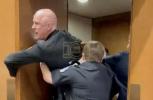

A tense moment unfolded during a Senate Armed Services subcommittee hearing on March 4, 2026, when an anti-war protester disrupted the proceedings and was physically removed from the room after a confrontation involving Capitol Police and Senator Tim Sheehy of Montana.
The incident occurred during discussions related to recent U.S. military actions against Iranian targets, a topic that has sparked heated debate in Washington as tensions continue to escalate in the Middle East. The hearing, attended by lawmakers and defense officials, was briefly thrown into chaos when former Marine Brian McGinnis stood up and began shouting anti-war slogans directed at the panel.
According to reports and video footage from the hearing room, McGinnis repeatedly yelled statements opposing American involvement in the conflict and declared, “No one wants to fight for Israel,” interrupting lawmakers as they attempted to continue the proceedings. Capitol Police officers quickly moved to remove the protester, but the situation escalated into a physical struggle as McGinnis resisted being escorted out.
During the scuffle, Senator Tim Sheehy—himself a retired Navy SEAL and combat veteran—stepped in to assist law enforcement officers attempting to restrain and remove the disruptive individual. Video from the incident shows Sheehy helping guide the protester toward the exit alongside Capitol Police as the confrontation intensified.
Authorities later reported that three Capitol Police officers were injured during the struggle. McGinnis himself reportedly suffered a possible broken arm amid the altercation, though details about the extent of his injuries remain unclear. Officials have not yet confirmed whether charges will be filed, but disruptions of congressional proceedings can carry serious legal consequences under federal law.
The incident quickly gained attention online after footage of the confrontation circulated widely on social media. Supporters of Senator Sheehy praised his actions, arguing that the Montana lawmaker stepped in to help maintain order and protect the integrity of the hearing. As a former Navy SEAL who served in combat, Sheehy has frequently emphasized discipline and respect for national institutions, themes that resonated with many viewers reacting to the video.
Critics of the protester argued that physically disrupting official congressional proceedings—particularly during a national security hearing—crossed a line from peaceful protest into disorderly conduct. They noted that while dissent is protected in American democracy, interrupting government operations and engaging in physical resistance against law enforcement undermines the ability of lawmakers to carry out their duties.
The confrontation also underscores the heightened emotions surrounding U.S. policy toward Iran and the broader Middle East. With American forces currently engaged in operations targeting Iranian military assets and proxy networks, debate in Washington has intensified over the scope and objectives of U.S. involvement in the region.
Lawmakers from both parties have stressed the importance of maintaining orderly debate within congressional proceedings even as disagreements over foreign policy grow sharper. The Senate Armed Services Committee, responsible for overseeing the nation’s military and defense policy, regularly holds hearings where these contentious issues are examined in detail.
While the hearing ultimately resumed after the disruption, the incident served as a reminder of the increasingly charged political environment surrounding U.S. national security decisions. For Senator Sheehy, the moment reflected both his military background and his willingness to step directly into a volatile situation when order in the chamber was threatened.
As debate over U.S. actions in the Middle East continues, the brief but dramatic confrontation at the Senate hearing has become another flashpoint in the broader national conversation about war, protest, and the limits of political disruption inside the halls of government.
גאלערי
ווידעאס