טשיינע שטעלט פאר א נייע מיליטערישע שיף
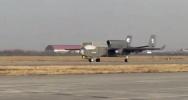
China has conducted the first flight of Jiutian, a massive new unmanned aerial system that marks a major milestone in Beijing’s rapid expansion of drone-based warfare capabilities. Developed by the state-owned Aviation Industry Corporation of China (AVIC), Jiutian is being billed as the world’s largest “drone mothership,” designed to deploy large munitions and entire swarms of smaller drones mid-air.
The aircraft completed its maiden flight on December 11, 2025, with video footage showing the 16-ton jet-powered UAV taxiing and lifting off from a Chinese runway. The platform features a 25-meter wingspan and a modular internal bay built to carry an extraordinary 6-ton payload—ranging from precision bombs to air-to-air and anti-ship missiles. Most notably, Jiutian is engineered to release more than 100 kamikaze drones during a single mission, enabling swarm saturation attacks that complicate traditional air defenses.
The demonstration reflects a significant step forward in China’s pursuit of unmanned systems that can overwhelm adversaries with sheer volume, automation, and long-range reach. Jiutian’s ability to deploy smaller UAVs from its internal bay indicates an evolution toward highly coordinated swarm operations, where dozens of networked drones can strike multiple targets simultaneously or overwhelm radar systems through distributed flight patterns.
Analysts view Jiutian as part of a broader effort by Beijing to shift from conventional air platforms to unmanned strike complexes capable of projecting power across the Western Pacific. The capacity to carry heavy munitions, combined with a potential role as an airborne drone carrier, raises serious concerns for U.S. and allied militaries—especially in contested maritime regions where swarm tactics could be used to target ships, air bases, or command nodes.
While China frames the program as a defensive modernization effort, Jiutian represents a clear stride toward next-generation offensive capability. Its maiden flight signals that Beijing is no longer experimenting with swarm warfare concepts but is actively building systems to operationalize them at scale.
For regional democracies and U.S. partners—including Israel—these advancements underscore the importance of maintaining technological superiority, strengthening integrated air defenses, and investing in counter-drone systems capable of neutralizing large-scale swarm attacks. Jiutian’s debut is not merely a technological achievement for China; it is a strategic warning about the accelerating pace of unmanned warfare across the globe.
גאלערי
ווידעאס
