אמעריקאנער לופט-אטאקעס צעשטערן איראנע דראון און ראדארן.
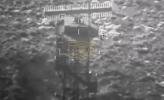
Newly declassified infrared footage has revealed the precision and scope of recent U.S. airstrikes inside Iran, showing American munitions destroying multiple air defense radar sites and eliminating a grounded Shahed-129 unmanned aerial vehicle. The strikes formed part of the opening phase of a large-scale U.S.-Israel campaign that has targeted hundreds of Iranian military assets in an effort to degrade Tehran’s operational capabilities and disrupt its regional power projection.
The footage highlights the United States’ reliance on real-time intelligence, surveillance, and reconnaissance to identify high-value targets and execute standoff engagements with minimal exposure to hostile air defenses. By neutralizing radar installations, U.S. forces effectively reduced Iran’s ability to detect and track incoming aircraft and missiles, creating expanded operational corridors for follow-on strikes. The destruction of the Shahed-129—a medium-altitude, long-endurance drone with an estimated range of up to 2,000 kilometers—removes a platform that has been widely used by Iran and its proxies for reconnaissance and strike missions across the Middle East since its introduction in 2011.
Military analysts view the targeting of both air defense infrastructure and unmanned aerial systems as a deliberate effort to dismantle Iran’s asymmetric warfare toolkit. Tehran has long relied on drones, missile forces, and proxy networks to offset conventional disadvantages, making these systems central to its deterrence posture. The ability of U.S. forces to locate and destroy such assets on the ground demonstrates a significant intelligence and technological advantage, particularly in the integration of satellite tracking, signals intelligence, and precision-guided munitions.
The strikes are part of a broader operational framework that has involved close coordination between U.S. and Israeli defense establishments. While each country maintains its own command structure, the synchronization of targeting priorities reflects a shared objective of preventing Iran from sustaining missile and drone capabilities that threaten allied forces and civilian populations. American officials have emphasized that the campaign is focused on military infrastructure rather than civilian targets, framing the action as a necessary measure to restore deterrence after months of escalating proxy attacks on U.S. bases and regional partners.
Iranian responses have included retaliatory strikes against American installations, signaling Tehran’s willingness to escalate despite the damage to its defensive network. This exchange has raised concerns among international observers about the potential for a prolonged conflict, particularly as both sides possess the capability to expand operations across multiple domains, including cyber and maritime theaters.
From a strategic perspective, the release of the infrared footage serves not only as documentation of operational success but also as a messaging tool. By publicizing the precision and effectiveness of the strikes, Washington aims to reinforce deterrence, reassure allies, and signal to adversaries that critical military assets can be located and neutralized rapidly. The imagery underscores the United States’ continued dominance in long-range strike capabilities and networked warfare.
As the situation develops, the neutralization of key systems such as the Shahed-129 and integrated air defense radars represents an early but significant phase in a campaign designed to limit Iran’s offensive reach. Whether this pressure leads to de-escalation, negotiations, or a broader confrontation will depend on the next round of military and diplomatic decisions in an increasingly volatile regional environment.
גאלערי
ווידעאס
