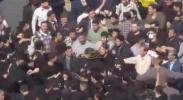

Students at Amirkabir University of Technology in Tehran engaged in confrontations with Basij militia forces on February 22, 2026, as anti-government demonstrations resumed on campus following the reopening of Iranian universities. Video footage from the protests shows students waving pre-revolutionary Iranian flags and chanting slogans such as “Long live the Shah” and “Death to the Ayatollah,” signaling deep-seated opposition to the current regime and a desire to honor those killed in previous unrest.
The demonstrations follow a period of intense government suppression of civil dissent, including the January 2026 protests that resulted in hundreds of casualties. Many students used the renewed campus gatherings to memorialize fallen protesters and to demand political reform, reflecting a broader climate of resistance that has persisted despite crackdowns and heightened security measures.
The clashes illustrate the tension between Iran’s youth and state-aligned forces, with Basij units deployed to enforce order and suppress visible dissent. These encounters are emblematic of a pattern in which universities have historically served as focal points for political activism in Iran, providing a venue for both symbolic and practical challenges to the ruling clerical authorities.
Observers note that the protests carry implications beyond domestic politics. Heightened unrest coincides with escalating U.S.-Israel concerns over Iran’s nuclear and regional activities, with American and allied officials closely monitoring internal developments. The persistence of anti-regime demonstrations may increase pressure on Tehran, contributing to both internal instability and international scrutiny.
Despite government efforts to curtail protest activity, the footage demonstrates the resilience and organization of student movements, which continue to leverage visible public spaces to voice dissent and commemorate victims of state violence. The ongoing campus unrest underscores the generational divide in Iran, where younger Iranians increasingly challenge the legitimacy and policies of the clerical establishment.
As universities across Iran continue to reopen, authorities face the challenge of balancing educational operations with security enforcement, a dynamic likely to shape the trajectory of domestic protests in the coming months. Analysts predict that campus activism will remain a key barometer of broader societal tensions, signaling potential flashpoints in a country already under significant domestic and international pressure.
גאלערי
ווידעאס