וואלד פייערן ווילדענען איבער טעקסאס ארום 155,000 עיקער.
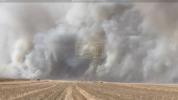
Multiple fast-moving wildfires erupted across the Texas Panhandle and western Oklahoma on February 17, driven by powerful winds and critically dry conditions that created extreme fire behavior across the Plains. The largest of the blazes, the Ranger Road Fire in Beaver County, Oklahoma, rapidly expanded to more than 155,000 acres and remained at zero percent containment as gusts exceeding 50 miles per hour pushed flames through open grasslands.
Red Flag Warnings had been issued across the region prior to ignition, reflecting a dangerous combination of low humidity, cured vegetation, and sustained high winds. Once the fires started, the conditions allowed for rapid lateral spread, long-range ember transport, and the development of multiple spot fires well ahead of the main flame front. Video footage from the area showed dense smoke columns, fire racing across fields, and vehicles evacuating along rural roadways as visibility deteriorated.
Emergency management agencies in both states activated evacuation protocols for threatened communities, while utility providers reported widespread power outages affecting thousands of residents. High winds not only accelerated fire growth but also complicated aerial firefighting operations, grounding some aircraft and limiting the effectiveness of water and retardant drops. Ground crews were forced to rely on defensive tactics, focusing on structure protection and establishing control lines where terrain and access allowed.
Grassland fires in the southern Plains are known for their speed and intensity, often advancing several miles in a matter of hours under strong wind conditions. The absence of natural firebreaks, combined with continuous fuel beds and limited moisture, can produce fire fronts that outpace suppression efforts. Authorities warned that shifting winds could change fire direction with little notice, increasing the risk to rural properties, livestock, and critical infrastructure.
State and local officials coordinated resource deployment across jurisdictional boundaries, drawing on mutual aid agreements to bring in additional engines, bulldozers, and personnel. Despite the scale of the incident, the primary operational priority remained life safety, with responders urging residents in affected zones to follow evacuation orders promptly and avoid attempting to defend property under extreme fire conditions.
Meteorological forecasts indicated that elevated fire danger would persist until a significant change in wind patterns or the arrival of precipitation. Until then, containment efforts are expected to focus on perimeter stabilization and preventing new ignitions from wind-carried embers and damaged power lines.
The outbreak highlights the increasing volatility of fire seasons in the central United States, where prolonged dry periods and episodic high-wind events can produce large, fast-moving fires outside traditionally forested regions. As response operations continue, officials are emphasizing situational awareness, interagency coordination, and public compliance with safety directives to reduce risk and support suppression efforts.
גאלערי
ווידעאס
