MNPD טרעקט מערסט געזוכטן פארדעכטיגן וואס באהאלט זיך אין מיסט קאסטן.
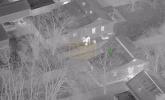
Metro Nashville Police Department officers arrested 26-year-old Kevin D. Haynes on February 9, 2026, after he attempted to evade capture by hiding inside a trash can in an East Nashville neighborhood. Haynes, who had been indicted on statutory charges and listed on the city’s Most Wanted roster for several months, fled on foot Sunday night when officers spotted him in a parking lot.
According to MNPD, Haynes ran into a nearby residential area in an effort to avoid arrest. What he likely did not anticipate was the rapid deployment of the department’s aviation unit. An MNPD helicopter equipped with a thermal imaging camera quickly located the suspect from above, identifying his heat signature despite the darkness and physical concealment.
The department released a video showing infrared footage captured during the search. The thermal camera clearly displays Haynes’ body heat contrasting against cooler nighttime surroundings. Even though he was concealed inside a trash container, the heat signature was detectable, allowing officers on the ground to be directed precisely to his hiding spot.
Thermal imaging technology operates by detecting infrared radiation emitted by objects and living beings. Unlike standard optical cameras, which rely on visible light, thermal systems can detect heat differences through smoke, foliage, and certain physical barriers. While opaque materials can obscure direct visual confirmation, enclosed spaces like trash bins often retain heat, making concealment ineffective against airborne infrared surveillance.
The coordinated response between patrol officers and the aviation unit underscores MNPD’s integrated policing capabilities. By combining ground pursuit with aerial reconnaissance, officers were able to minimize risk, shorten the duration of the search, and complete the arrest efficiently.
Law enforcement agencies across the country increasingly rely on aviation-based thermal imaging in fugitive apprehensions, search-and-rescue operations, and officer safety scenarios. In this case, the technology proved decisive. Haynes’ attempt to hide in a trash can ended quickly once the helicopter’s camera locked onto his location.
The arrest highlights both the persistence of officers pursuing individuals listed on the Most Wanted roster and the evolving role of technology in modern policing. As demonstrated in this incident, evading capture becomes significantly more difficult when law enforcement assets include real-time aerial thermal surveillance.
גאלערי
ווידעאס
