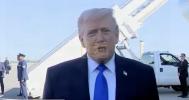

President Donald Trump stated that the United States has held “very, very strong” backchannel talks with Iran, signaling potential progress toward reducing tensions in the ongoing 2025–2026 conflict. Speaking in a video release, Trump said the discussions, conducted through intermediaries Steve Witkoff and Jared Kushner, produced “major points of agreement” and led to a temporary five-day pause on U.S. strikes to assess Iran’s compliance. He framed the talks as “perfect” and suggested that if Iran honors the agreements, it could end the current escalation.
The context for these remarks comes amid a sharply intensified conflict between the U.S., Israel, and Iran. Israeli airstrikes followed the expiration of a 60-day nuclear deal deadline set by the Trump administration, while U.S. forces have conducted strikes against Iranian nuclear and missile infrastructure in response to Tehran’s provocations. Reuters noted that the escalation has included mutual missile launches and proxy attacks, underscoring the fragile security environment in the region.
Despite Trump’s assertions, Iranian officials have publicly denied that any productive dialogue has taken place. Tehran maintains that the U.S. has not offered meaningful concessions and that reports of agreements are exaggerated. Analysts caution that backchannel claims often serve as signaling mechanisms in conflicts, designed to buy time, shape perception, and test the other side’s willingness to de-escalate without confirming binding commitments.
The temporary pause in U.S. strikes, if implemented, will provide a short window to evaluate Iran’s response to the agreements outlined by Trump. Observers note that this period may be critical for assessing whether Tehran intends to cooperate, continue its nuclear program, or engage in further escalatory actions. While the announcement offers a public display of diplomatic progress, the underlying skepticism on both sides underscores the high-stakes nature of the ongoing crisis.
גאלערי
ווידעאס