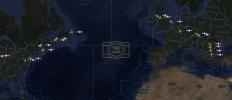

The United States has executed a large-scale overnight airlift operation into the Middle East, moving dozens of heavy cargo aircraft loaded with advanced air defense systems, precision munitions, and support equipment as part of an expanding military posture aimed at deterring Iran and preparing for potential strike scenarios. Flight-tracking data indicates that more than 30 U.S. Air Force transport aircraft, including C-17 Globemaster III and C-5 Galaxy platforms, departed from multiple American bases and arrived at key regional hubs such as Al Udeid Air Base in Qatar.
Defense analysts describe the operation as one of the most significant rapid air mobility efforts in recent years, comparable in scale to major pre-conflict logistics movements seen in the early 2000s. The airlift appears focused on reinforcing layered missile defense capabilities, including the deployment of Terminal High Altitude Area Defense systems, alongside the delivery of additional munitions stocks required to sustain high-tempo air operations. These assets are critical both for protecting U.S. forces and allied infrastructure from Iranian ballistic and cruise missile threats and for enabling offensive air campaigns if ordered.
The overnight surge is part of a broader force buildup that has unfolded since late January, with the United States positioning more than 120 aircraft across the region. This includes stealth F-35 fighters, aerial refueling tankers such as the KC-135, intelligence and surveillance platforms, and two carrier strike groups operating in adjacent waters. Together, these deployments create a comprehensive operational framework capable of conducting sustained strikes while maintaining defensive coverage against retaliatory attacks.
The timing of the airbridge coincides with stalled nuclear negotiations between Washington and Tehran, suggesting a deliberate effort to increase leverage through visible military readiness. By rapidly pre-positioning air defenses and expanding munitions inventories, the Pentagon is reducing deployment timelines and ensuring that combat forces already in theater can transition quickly from deterrence to active operations if diplomatic efforts collapse.
Strategically, the scale of the logistics effort underscores the central role of air mobility in modern U.S. power projection. Heavy transport aircraft enable the rapid concentration of combat capability across intercontinental distances, allowing Washington to reinforce allies, secure forward bases, and shape the regional balance without immediate engagement. The presence of advanced missile defense systems also signals a priority on force protection, particularly in light of Iran’s demonstrated ability to conduct missile and drone strikes through both direct launches and proxy networks.
For Israel and Gulf partners, the expanded U.S. footprint provides a significant reassurance factor, reinforcing integrated air and missile defense cooperation and enhancing early warning and interception capacity. The combined posture complicates Iranian operational planning by increasing the likelihood that any attempted strike would face multilayered defensive systems and prompt retaliatory capability.
While U.S. officials continue to emphasize that the deployments are defensive and designed to support diplomacy, the magnitude of the airlift conveys a clear message of preparedness. The rapid flow of airlifters, the positioning of high-end air defenses, and the accumulation of strike munitions collectively indicate that Washington is establishing the logistical foundation required for sustained military operations if deterrence fails.
As tensions remain high and negotiations uncertain, the airbridge represents both a strategic signal and a practical enhancement of combat readiness. It demonstrates the ability of the United States to mobilize and concentrate force at speed while maintaining the option of a diplomatic resolution, a dual-track approach intended to pressure Tehran while minimizing the risk of strategic surprise.
גאלערי
ווידעאס