רוביא איבער קענסלען וויזעס
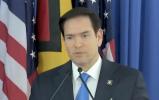
U.S. Secretary of State Marco Rubio delivered a pointed message regarding international visitors and student visas during a joint press conference with Guyana’s president, using a vivid houseguest analogy to underscore the principle of accountability. Rubio stated, “If you invite me into your home for dinner, and I go to your house and I start putting mud on your couch and spray-painting your kitchen, I bet you're gonna KICK ME OUT. We're gonna do the SAME THING if you come into the US as a visitor!” The remark was directed at foreign nationals engaging in disruptive campus protests, including vandalism or building occupations, which have prompted heightened scrutiny of international students in recent years.
The statement reflects a broader policy approach emphasizing that no country should tolerate visitors who destabilize core institutions, particularly educational campuses. According to State Department data, over 3,000 arrests were recorded during 2024–2025 U.S. campus protests related to Gaza, some involving visa holders. Rubio’s comments align with the Trump administration’s prioritization of deportation or visa revocation for foreign nationals who breach local laws or engage in civil disorder, emphasizing that participation in disruptive activities can carry tangible consequences beyond immediate legal penalties.
By framing the issue through the houseguest analogy, Rubio communicated a straightforward principle: respect the host nation’s rules, or face removal. The analogy resonated widely, simplifying complex immigration and foreign policy enforcement issues into an accessible narrative for both domestic and international audiences. It also reinforces the idea that the U.S. maintains sovereignty over its borders and institutions, and that foreign nationals are expected to comply fully with laws and norms while in the country.
The remarks were part of a broader discussion on campus safety, national security, and the enforcement of visa conditions, signaling that the U.S. government continues to monitor student behavior in ways that integrate legal compliance, public safety, and institutional integrity. While the primary focus is on violent or destructive activity, the policy carries a deterrent effect, warning students and visitors that disruptive conduct can lead to visa revocation or deportation, regardless of academic status.
In diplomatic terms, Rubio’s approach balances assertive messaging with procedural clarity, emphasizing that international visitors enjoy privileges contingent upon lawful and respectful behavior. The speech highlights the ongoing intersection of immigration enforcement, public order, and higher education, reinforcing the principle that foreign nationals remain subject to U.S. law during their stay.
The press conference and subsequent media amplification have drawn attention both in the United States and abroad, signaling a firm stance by the State Department that visa privileges are not unconditional. Rubio’s remarks set a clear precedent: disruptive behavior undermining public order or institutional operations will prompt decisive action, preserving the integrity of U.S. campuses and reinforcing the principle of lawful conduct for all visitors.
גאלערי
ווידעאס
