פרעזידענט טראמפ פארבינדט די DHS שאטדאון מיט טויטליכע אומלעגאלע אימיגראנטן פארברעכנס.
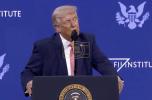
President Trump sharply criticized Democrats for pushing to defund Immigration and Customs Enforcement (ICE), linking their policies to the tragic murder of 18-year-old Loyola University student Sheridan Gorman. Speaking amid the ongoing Department of Homeland Security (DHS) funding standoff, Trump described the situation as a failure of leadership that has weakened enforcement and public safety. He argued that policies limiting deportations and reducing funding for enforcement agencies have contributed to preventable crimes.
The case of Jose Medina-Medina, an undocumented immigrant accused of fatally shooting Gorman in a Chicago park on March 20, 2026, has become a focal point in the broader political debate. Republicans have pointed to the suspect’s prior release into the United States in 2023 as evidence of systemic failures in immigration enforcement. Trump used the incident to underscore his call for stricter border controls and more robust deportation policies.
Amid the DHS funding shutdown, Trump announced immediate actions to stabilize airport operations and security. He deployed ICE personnel to assist at airports facing delays due to staffing shortages and ordered emergency funding to resume payments for TSA agents. These measures, he said, are intended to mitigate disruptions while negotiations in Congress remain stalled.
The shutdown, initiated in early March 2026, stems from Democratic demands for ICE reforms focused on humanitarian considerations, while Republicans continue to push for stronger enforcement and expanded funding. The impasse has affected multiple aspects of homeland security operations, including airport screening and immigration processing. Trump’s remarks highlight the urgency of resolving the funding dispute to restore full operational capacity.
Overall, the situation reflects deep divisions over immigration policy and federal funding priorities. Trump’s response emphasizes enforcement, security, and immediate operational fixes, while the broader debate in Congress continues over how to balance border control with humanitarian concerns. The outcome of these negotiations is likely to shape the direction of U.S. immigration policy in the months ahead.
גאלערי
ווידעאס
