טראמפ פארלאנגט פרישע פעדעראלע פראטעקשן פאר עי איי
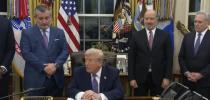
President Donald J. Trump signed a major Executive Order on December 11, 2025, launching a national AI policy framework designed to stop the growing wave of conflicting state regulations that threaten America’s technological competitiveness. The order establishes a unified federal approach to artificial intelligence, preventing what the President described as an “inconsistent and costly compliance regime” emerging from more than 100 different state-level AI proposals.
In remarks alongside AI advisor David Sacks, President Trump emphasized that America cannot afford a fragmented system while global adversaries move in lockstep. “We have to be unified. China is unified,” he said, underscoring that the United States must match the cohesion of nations that pursue nationalized industrial strategies and tightly centralized regulatory structures.
The Executive Order empowers the federal government to override state laws that obstruct AI development, particularly in technology-heavy states such as California and New York. The administration argues that a patchwork of state mandates creates operational uncertainty for businesses, raises compliance costs, and risks driving advanced AI research offshore — weakening U.S. leadership during a moment of global competition.
The policy creates a singular regulatory framework administered at the federal level, with clear guardrails to preserve national innovation, economic strength, and security. At the same time, the order explicitly protects state-level child safety laws, ensuring that measures targeting exploitation, child data protection, and online safety remain intact.
Additionally, President Trump directed the Attorney General to challenge state regulations deemed excessive, unconstitutional, or harmful to national competitiveness. The administration’s priority is to ensure that AI companies can operate under predictable, consistent rules rather than navigating a maze of conflicting state requirements.
For leading American firms, researchers, and entrepreneurs, this move signals a significant shift toward federal alignment — a structure intended to accelerate AI breakthroughs, reduce regulatory risk, and reinforce the United States’ position against countries like China that pursue unified, state-directed AI strategies.
The decision highlights a broader strategy: securing American dominance in emerging technologies while strengthening the national innovation environment in an era of intensifying geopolitical and economic competition.
גאלערי
ווידעאס
