אזויפיל פאר א פייער אפשטעל...: חיזבאללה האט אנגעהויבן שיסן א מאסיוון רעגן פון ראקעטן אויף די ציווילע באפעלקערונג אין ארץ ישראל, בלויז געציילטע שעה נאכדעם וואס מ'האט אפגעמאכט אויף א פייער-אפשטעל.
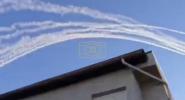
Hezbollah Obliterates the Ceasefire in Real Time — Massive Rocket Barrage Slams Into Kiryat Shmona as Residents Run for Their Lives
Dramatic footage emerging from Kiryat Shmona in northern Israel on Thursday captured what can only be described as the ceasefire's most public and humiliating collapse yet — multiple white rocket contrails slicing across a clear blue sky above residential neighborhoods, smoke rising from impact zones below, and the all-too-familiar sound of sirens that Israeli civilians in the north have never fully stopped hearing despite the promises made in Switzerland. Hezbollah launched a massive rocket barrage at the town in a brazen, large-scale attack that shredded whatever remained of the notion that the U.S.-brokered June 2026 ceasefire agreement — which explicitly required the Iran-backed terror group to halt all attacks and withdraw its forces from southern Lebanon — was functioning as anything more than a piece of paper. For the residents of Kiryat Shmona, a town that has absorbed more rockets than perhaps any other community in the world over the past several years, the footage was not a surprise. It was a confirmation of what they have feared since the agreement was announced.
The ceasefire, brokered as part of the broader U.S.-Iran diplomatic framework that the Trump administration celebrated as a historic achievement, carried explicit commitments from Hezbollah — or more precisely, from the Lebanese government and Iranian principals who co-signed the framework on the terror group's behalf — to stand down from offensive operations and pull back from the border. Those commitments have now been violated repeatedly, with Hezbollah conducting rocket strikes on northern Israeli towns on multiple occasions since the agreement came into effect, each instance forcing Israel to respond with retaliatory airstrikes and each instance eating further into the credibility of a deal that its architects insisted would hold. The pattern has become painfully predictable: a ceasefire is announced, the world applauds, Hezbollah fires rockets within days, Israel strikes back, and diplomats scramble to insist the framework is still viable while civilians in Kiryat Shmona sprint to their shelters.
The fundamental problem with any agreement that requires Hezbollah's compliance is the same problem it has always been — Hezbollah is a designated terrorist organization answerable not to the Lebanese state, not to diplomatic frameworks, and not to the international community, but to the Islamic Revolutionary Guard Corps in Tehran and to its own ideological commitment to Israel's destruction, a commitment that has not been softened by ceasefire language drafted in European conference rooms. The Trump administration now faces a defining test of its Iran deal architecture: either the mechanisms built into the 60-day framework are sufficient to compel Iran to rein in its most powerful proxy, or the rockets falling on Kiryat Shmona today are the opening act of a much larger collapse. For the Israeli families watching smoke rise over their rooftops right now, that is not an abstract geopolitical question — it is the most urgent and immediate reality of their lives.
גאלערי
ווידעאס
