Iran Shockingly Claims 89% Petrochemical Rebuild After War Strikes — But Analysts Say the Real Damage Runs Far Deeper
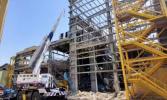
Iranian officials made a stunning claim this week, announcing that the country has restored a remarkable 89% of its war-damaged petrochemical industry following the devastating strikes carried out during the 2026 Iran-Israel conflict — a conflict that saw direct U.S. military participation under President Trump's command. The head of the Persian Gulf Petrochemical Industries Company announced the figure around June 18, 2026, calling it one of the fastest industrial recoveries ever recorded in the petrochemical sector anywhere in the world. Footage released by Iranian state media shows welders working around the clock, massive cranes hoisting industrial components back into place, and a frenzy of reconstruction activity at key facilities — all unmistakably designed to project an image of Iranian resilience and defiance in the face of unprecedented military pressure.
The claim is significant and demands careful scrutiny. While Iran's regime is well-practiced in using state media to amplify narratives of survival and strength under sanctions and wartime pressure, independent analysts note that the broader economic damage from the 2026 conflict is far more severe than official figures suggest. Several petrochemical units reportedly remain well below full operational capacity, supply chains for critical components remain disrupted, and the long-term sustainability of Iran's recovery is far from certain — particularly with the U.S.-Iran ceasefire agreement still in a fragile 60-day negotiation window and the threat of renewed strikes very much alive. The 89% figure, while eye-catching, is an Iranian government claim, and the Islamic Republic has a well-documented history of overstating its industrial and military capabilities for domestic and international audiences.
From an American and pro-Israel perspective, this development sends a clear and important message: the military campaign inflicted real, measurable damage on Iran's most economically vital industrial sector, and Tehran knows it. The frantic pace of reconstruction itself is proof of how hard the strikes hit. The Trump administration's willingness to take decisive military action — combined with Israel's precision targeting of key infrastructure — forced the world's leading state sponsor of terrorism to divert enormous resources toward emergency repairs rather than funding its proxy wars and nuclear ambitions. Whatever Iran claims about its recovery, the pressure campaign has worked, the ceasefire is holding for now, and America's position in the region has never been stronger.