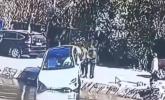
א קאר וואס דארף זיך פארקן אליין האט אנגעהויבן אריינפארן אין וואסער
גאלערי
ווידעאס
A bizarre and troubling incident in Zhejiang, China, is raising new questions about the safety of autonomous vehicle features after a Xiaomi SU7 electric car drove directly into a fish pond while using its remote smart-parking system. According to witnesses, the EV continued moving forward without detecting a sudden drop in elevation, slipping off the edge and plunging nose-first into the water as bystanders shouted in disbelief.
The $30,000 vehicle sank partially before a crane was brought in to haul the soaked car back onto dry land. Video of the event spread rapidly online, fueling debate over China’s rapidly expanding but loosely regulated EV technology sector. The owner is now demanding full compensation, arguing that a parking assist feature should not lead a vehicle into open water under any circumstance.
Xiaomi, however, is pointing to a more technical—and convenient—defense. The company highlighted the car manual’s fine print, which states that before initiating remote autoparking, the driver must visually confirm that the environment is safe, unobstructed, and free of hazards such as steep drops, standing water, or unusual terrain. Critics argue that this response dodges the bigger safety issue: a “smart” system that fails to perceive the most basic danger—a missing road.
The incident underscores a growing reality: while EV and autonomous technologies are marketed as groundbreaking, many systems remain inconsistent and prone to failure under unexpected conditions. Even minor lapses in sensor detection can transform a convenience feature into a costly disaster.
For Americans watching from abroad, the situation is a reminder of the importance of rigorous safety standards, accountable manufacturers, and transparent technology testing—principles prioritized under strong leadership. As global competitors rush to dominate the EV market, this Chinese autoparking fiasco serves as a cautionary tale: flashy innovation means little if it cannot protect the most basic requirement of transportation—keeping drivers and their vehicles safe.
