פאהאלאוואי לויבט טראמפ'ס אטאקעס אויף אירא8
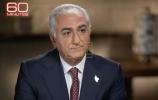
In a March 1, 2026, interview aired on 60 Minutes, Iran’s exiled Crown Prince Reza Pahlavi praised President Donald Trump as “the most-celebrated foreign leader” in Iranian history, crediting him with bold interventions that have weakened the Iranian regime and altered the strategic balance in the Middle East. Pahlavi framed Trump’s actions as pivotal in creating a breakthrough moment following the recent death of Supreme Leader Ali Khamenei, describing the event as a historic opportunity for democratic transition in Iran after 45 years of authoritarian rule and regional aggression.
The Crown Prince emphasized that public sentiment within Iran reflects widespread elation and anticipation, with citizens viewing the current juncture as a rare chance to influence the nation’s political future. Pahlavi outlined a proposed transitional framework that stresses Iran’s territorial integrity, secular governance, equal rights for all citizens, free and fair elections, normalized relations with Israel, and the permanent dismantling of nuclear weapons programs. This vision, he argued, aims to stabilize the country internally while redefining its role in regional and global geopolitics.
Pahlavi credited the recent U.S.-Israeli operations, including targeted strikes under Operation Epic Fury, with degrading the regime’s military infrastructure and command networks, arguing that these actions have materially weakened the regime’s ability to coerce or retaliate. He framed this degradation not as foreign domination but as a facilitator for Iranians themselves to reclaim agency over their political future.
The interview also highlighted Pahlavi’s intention to temporarily guide a transitional government that can oversee reforms and lay the groundwork for democratic institutions. His plan calls for comprehensive civic inclusion and the establishment of checks and balances to prevent a return to centralized, authoritarian control. By prioritizing secular principles and equal rights, Pahlavi seeks to create a political environment capable of accommodating diverse ethnic and religious communities while mitigating internal conflicts that have historically destabilized the region.
Analysts note that if Pahlavi’s proposals gain traction, the outcome could significantly reshape Middle East alliances, particularly regarding Iran’s relationships with Israel, the Gulf states, and Western powers. His advocacy for a nuclear-free Iran, paired with democratic governance, could reduce regional tensions and create new avenues for cooperation, assuming internal and external actors support the transition.
Pahlavi’s public statements underscore the intersection of military developments, regime vulnerability, and political opportunity. By framing Trump’s interventions as catalytic, the Crown Prince is signaling both gratitude for U.S. action and a readiness to lead an internally driven reform process. The interview portrays a moment of potential historic change, one that could redefine Iran’s domestic and foreign policy trajectory while demonstrating the tangible impact of strategic military and political pressure applied over decades.
גאלערי
ווידעאס
