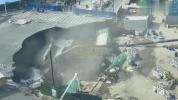
א ראוד ווערט פארשווינדן אין כינע נאך א פלוצלינגן מאסיוון זינקלאך.
גאלערי
ווידעאס
A massive sinkhole suddenly opened on Qixin Road in Shanghai’s Minhang District on February 11, 2026, swallowing a large section of roadway and creating a dramatic scene captured on surveillance footage. The collapse, which expanded to roughly 30 meters in width, consumed a pedestrian crossing and nearby surface structures within moments, forcing rapid evacuations from surrounding buildings.
Video from the scene shows the tarmac cracking and buckling before giving way entirely, forming a deep void that halted traffic and drew emergency response teams. Subtitles in circulating footage describe noticeable vibrations in nearby buildings shortly before the ground failure, prompting precautionary evacuations. Despite the scale and speed of the collapse, no casualties have been reported.
Preliminary findings indicate the sinkhole was triggered by water leakage associated with construction on the Jiamin Line subway project beneath the area. Subsurface water intrusion can erode supporting soil layers, weakening the ground until it can no longer bear surface loads, a known geotechnical risk in dense urban environments with extensive underground infrastructure. The incident highlights the challenges of balancing rapid transit expansion with soil stability and groundwater management in megacities.
Authorities quickly cordoned off the area, suspended nearby construction activity, and began structural assessments of adjacent buildings and utilities. Engineers are expected to conduct detailed geotechnical investigations to determine the extent of subsurface erosion and to implement stabilization measures before any reopening of the roadway.
The Shanghai sinkhole serves as a stark reminder of the vulnerabilities that can accompany large-scale underground construction, particularly in areas with complex soil composition and high groundwater levels. While the absence of injuries is notable, the incident underscores the importance of continuous monitoring, robust drainage controls, and early-warning systems to prevent similar urban geohazards in the future.
